



Personally vetted instructors
Dyslexia Writing Support tutors, lessons & classes
Word by word The page that fills slowly, one careful sentence at a time.
Personally vetted writing tutors for students with dyslexia. Spelling, handwriting, sentence construction, and written expression taught as the layered set of skills they are, with attention to the orthographic processing that makes writing particularly hard for the dyslexic brain.

Your instructors
Dyslexia Writing Support tutors for private lessons & classes
Strommen has been coaching writing work in LA since 2006, and our dyslexia writing-support roster includes structured-literacy-trained tutors with specific expertise in the orthographic-processing layer, the spelling layer, and the written-expression layer. Every tutor below was met and vetted by us in person or via thorough video interview, with credentials verified. No marketplace. No automated profiles. Real teachers and writing specialists with real backgrounds.
Filter by location, age, or price. Then book a 30-minute free trial.
Below are the Strommen tutors who specialize in writing support for students with dyslexia. Photos, ratings, and rates are real. Click any card to read their bio and book a free 30-minute trial.
I want to learn…
Every tutor, personally met. — founder-vetted since 2006, in Los Angeles and online worldwide.
Get a personalized plan
Pick your language — a language advisor will match you with the right tutor and map out your path.

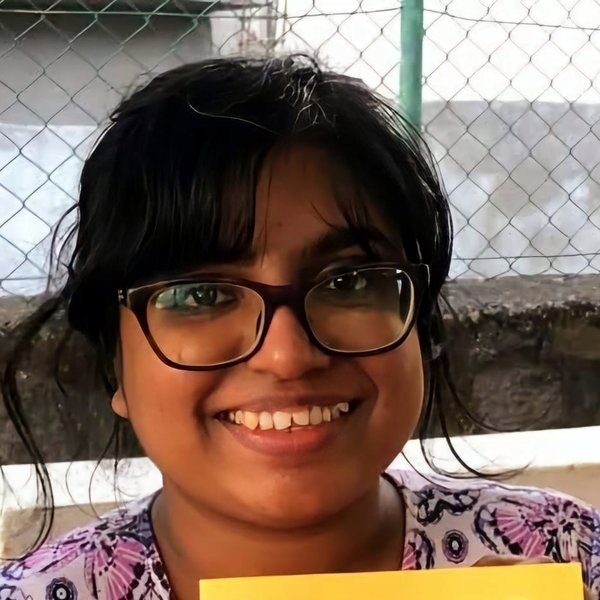
Bachelor's degree in Sociology
Learn English & French with clarity, confidence, and comfort.
Personally vetted · Strommen’s note
Kareshma specializes in teaching English and French to students with dyslexia and autism, structured literacy and routine-based learning built in.
Specialties
Bachelor's degree in Sociology
Learn English & French with clarity, confidence, and comfort.
Specialties
Personally vetted · Strommen’s note
Kareshma specializes in teaching English and French to students with dyslexia and autism, structured literacy and routine-based learning built in.

The layers — spelling, handwriting, expression
5 elements of dyslexia-aware writing instruction
Five concrete elements that show up in well-targeted writing work for dyslexic students. Useful for parents trying to recognize the difference between focused intervention and general homework help.
-
01
Orthographic processing as a separate skill
Orthographic processing is the brain's ability to recognize, recall, and produce the visual-spelling patterns of words. It is a separate cognitive system from phonological processing and is often where the dyslexic writing bottleneck actually sits. A student who can hear the sounds in a word and still spells it three different ways on the same page has an orthographic-processing weakness; the right intervention is targeted spelling instruction plus retrieval-practice strategies, not more phonemic-awareness drill.
e.g. The word <em>their</em> heard correctly, written variously as <em>thier, ther, their, thare</em> across one paragraph: classic orthographic-processing pattern.
-
02
The "say it, spell it, write it" routine
The most basic structured-literacy spelling routine, and the one every credible program teaches early. The student says the word aloud, articulates the spelling letter by letter, writes the word while watching the hand form the letters, and reads the written word back. Each step engages a different cognitive channel (auditory, articulatory, visual-motor, visual) so the spelling pattern gets stored across multiple memory systems. Reinforces more durably than visual practice or rote copying.
e.g. <em>Friend</em>: student says "friend," spells aloud "F-R-I-E-N-D," writes the word watching the hand, reads it back. Repeat across several spaced sessions.
-
03
Mnemonic spelling strategies
Personal and programmatic memory aids for difficult patterns. Programmatic ones include the FLOSS rule (double the final F, L, S, or Z after a short vowel: stuff, hill, miss, fuzz), the doubling rule for suffixes (hop + ing = hopping), and the y-to-i change (happy + ness = happiness). Personal ones include sentence mnemonics for stubborn words (Big Elephants Can Always Understand Small Elephants for because). Tutors help students build a personal mnemonic library and refresh it across sessions.
e.g. FLOSS rule: <em>stuff, kill, dress, jazz</em>. All end in a doubled consonant after a short vowel.
-
04
The 6+1 Traits of Writing framework
A widely used approach for teaching written expression as a set of distinct skills rather than as a single overall "how good is the essay" judgment. The seven traits: ideas, organization, voice, word choice, sentence fluency, conventions (spelling, grammar, punctuation), and presentation. Letting tutor and student work on one or two traits at a time prevents the common pitfall of trying to fix every layer in the same paragraph at once. The IDA Writing Standards support this kind of layered approach.
e.g. Week 1: work on idea development. Week 2: organization. Week 3: sentence fluency. Conventions get their own dedicated editing pass at the end of every draft.
-
05
The Brown-Carlisle Inventory and developmental spelling assessment
Diagnostic tools used to identify which spelling-pattern categories the student has mastered and which still need work. Brown-Carlisle covers phonological processing across multiple domains. The Words Their Way developmental-spelling assessment maps the student's current stage in the spelling-acquisition sequence (emergent, letter-name, within-word, syllables-and-affixes, derivational-relations). Knowing where the student sits prevents working on patterns they already know or patterns they are not yet ready for.
e.g. Words Their Way places a student in the "within-word pattern" stage: focus on long-vowel patterns and r-controlled vowels, skip syllable-juncture work for now.
About Dyslexia Writing Support
Writing is harder than reading for most dyslexic students
Writing is harder than reading for most dyslexic students, and the gap between the two often widens through the school years rather than narrowing. A child who has worked hard on phonics and structured-literacy instruction may end up reading at or near grade level by middle school while still producing written work that looks years behind: misspelled common words, fragmented sentences, an essay that contains good thinking in a form so labored the reader cannot find it. The reason is that writing layers several distinct skills (handwriting or keyboarding, spelling, sentence construction, paragraph organization, and the planning and revision processes that hold the whole act together) and the dyslexic brain typically has friction in at least three of those layers simultaneously. Reading lets the eye scan for meaning while skipping over words the brain cannot decode; writing forbids that workaround. Every word on the page has to be produced from inside.
The foundational issue is orthographic processing. Orthographic processing is the brain's ability to recognize, recall, and produce the visual-spelling patterns of words; it is a separate cognitive system from phonological processing and is the layer that converts the sound the student wants to write into the specific letter sequence the language uses. Dyslexic students very often have orthographic-processing weaknesses alongside their phonological ones, which is why a student who can hear the sounds in a word still spells it wrong in three different ways across a single page. The standard pedagogical response is to teach spelling alongside reading, using the same structured-literacy principles, and to give the student strategies for retrieving the orthographic pattern when memory fails. The "say it, spell it, write it" routine, taught in every structured-literacy program, is the most basic version of that approach: the student says the word aloud, articulates the spelling letter by letter, writes the word while watching the hand form the letters, and reads the written word back. Each step engages a different cognitive channel, which reinforces the pattern more durably than visual practice alone.
Handwriting is its own layer, and one that schools tend to abandon by third or fourth grade just as the dyslexic student is finally ready to benefit from explicit instruction in it. Letter formation, letter size, spacing, and the motor automaticity that lets the hand keep up with the brain are all teachable skills. For students whose handwriting is so labored that the act of forming letters consumes the working memory needed for composition, explicit handwriting instruction in the early or mid-elementary years can be transformative. For older students whose handwriting will not recover, the right intervention is keyboarding instruction and speech-to-text accommodations, which leads to a separate set of considerations addressed in the FAQs below. Several Strommen tutors run handwriting work using the Handwriting Without Tears program or the Slingerland approach to letter formation; others work in the Italic handwriting tradition that has had success with older students.
Spelling is the layer most parents focus on, and the layer where the orthographic-processing weakness shows up most visibly. Mnemonic spelling strategies (devices the student uses to remember difficult patterns) are a standard part of structured-literacy work. Some are programmatic (the FLOSS rule for double letters, the doubling rule for adding suffixes, the y-to-i change), and tutors teach them explicitly in a sequenced order. Others are personal to the student (the word because remembered through Big Elephants Can Always Understand Small Elephants, the word arithmetic through A Rat In The House Might Eat The Ice Cream) and tutors help build a personal mnemonic library that the student can return to. The Brown-Carlisle Inventory of Phonological Processing is one of the diagnostic tools used to identify which spelling-pattern categories the student has mastered and which still need work; the Words Their Way developmental-spelling assessment is another. Knowing where the student actually sits in the spelling-acquisition sequence prevents the common error of either working on patterns the student already knows (boring) or patterns they are not yet ready for (frustrating).
Written expression is the layer above spelling and handwriting, and the layer most often misjudged when teachers grade dyslexic students' essays. A student whose ideas are excellent and whose surface mechanics are weak gets graded on the mechanics, not the ideas, in most school settings. The work in tutoring is twofold: build the surface mechanics deliberately, and also build the meta-skills (planning, drafting, revising, editing) that let the student get the ideas onto the page in a form that survives a grader's first pass. The 6+1 Traits of Writing framework (ideas, organization, voice, word choice, sentence fluency, conventions, presentation) is one widely used approach for teaching written expression as a set of distinct skills rather than as a single overall "how good is the essay" judgment. The IDA's Writing Standards, less famous than the Reading Standards but published alongside them, lay out what structured-literacy-aligned writing instruction looks like. Tutors trained in these frameworks teach written expression as a layered skill, work on one or two layers at a time, and avoid the common pitfall of trying to fix the spelling, the handwriting, the sentence structure, and the organization of the same paragraph in one session.
The specific challenge with dyslexic students is that the layers interact. Asking a student to focus on essay organization while also worrying about spelling produces neither good organization nor good spelling. Most experienced tutors handle this by separating the layers in the writing process itself: a planning phase that uses graphic organizers and ignores spelling entirely, a drafting phase that focuses on getting ideas onto the page without stopping to revise, a revising phase that addresses content and organization, and an editing phase that addresses spelling and mechanics last. The Brown-Carlisle Inventory and the IDA Writing Standards both support this kind of staged-process approach; the underlying principle is that working memory is limited and asking the student to manage too many layers simultaneously is what breaks the writing.
A word on accommodations. Speech-to-text, word prediction, spell-check, and audiobooks are tools that mature dyslexic students use routinely, and the question of when to introduce them matters. For elementary students still building foundational skills, accommodations should not replace direct instruction in spelling and writing; the worry that the student will not learn to write without them is well-founded if accommodations are introduced too early. For middle and high school students who have done foundational work and need to keep up with the writing demands of secondary education, accommodations are appropriate and often essential; refusing them in the name of "building skills" can prevent the student from accessing grade-level curriculum at all. For college students and adults, the question is largely settled in favor of using whatever tools support productive work. Tutors work with families to calibrate this transition rather than treating it as binary.
The age range matters and the work shifts accordingly. Elementary students often need foundational handwriting plus structured spelling alongside their reading work. Middle school students typically need sentence-level work (varied sentence structure, subordination, paragraph construction) plus continued spelling instruction. High school students need essay-level work (argument structure, evidence integration, revision strategy) plus the accommodations training that will carry them into college. Adult students often need professional writing support, sometimes targeted at specific genres (technical reports, legal documents, academic articles). The trial is free and the first session diagnoses where the actual gaps sit, which often surprise parents who assumed the issue was somewhere else.
What you'll cover
Lessons & classes tailored to Dyslexia Writing Support
Structured spelling instruction and orthographic processing
Spelling instruction aligned with structured-literacy principles, addressing the orthographic-processing layer that often drives dyslexic writing difficulty. The "say it, spell it, write it" routine, programmatic spelling rules (FLOSS, doubling, y-to-i), and personal mnemonic strategies. Diagnostic placement using the Brown-Carlisle Inventory, the Words Their Way developmental-spelling assessment, or a school-supplied equivalent. Progress tracked across the spelling-acquisition stages.
Handwriting instruction (when age-appropriate) and keyboarding transition
For elementary and early-middle-school students, explicit handwriting instruction using Handwriting Without Tears, Slingerland, or Italic letter-formation programs. For older students whose handwriting will not recover, keyboarding instruction and the workflow planning needed to use speech-to-text and word-prediction tools effectively. The transition point gets calibrated to the student rather than imposed from a textbook age.
Sentence-level and paragraph-level writing instruction
Sentence construction (varied structure, subordination, embedded clauses), paragraph organization, and the meta-skills (planning, drafting, revising, editing) that hold composition together. Using the 6+1 Traits of Writing framework, tutors work on one or two traits at a time rather than trying to fix every layer simultaneously. Graphic organizers for the planning phase, deliberate drafting without stopping to revise, separate editing passes for content and for mechanics.
Accommodations training and assistive-technology workflow
For middle and high school students, working with speech-to-text, word-prediction software, and spell-check as productive tools rather than crutches. The transition from "build the skill" to "use the tools" gets calibrated to the student's age, foundational-skill level, and the writing demands of their current school setting. Adult students often need professional writing support targeting specific genres (technical reports, legal documents, academic articles) plus the assistive-technology workflow that supports them.
FAQ
About Dyslexia Writing Support lessons & classes
Why does my child read well but write so poorly?
Writing is harder than reading for most dyslexic students, and the gap often widens through the school years. Reading lets the eye scan for meaning while skipping over words the brain cannot decode; writing forbids that workaround. Every word on the page has to be produced from inside, which requires orthographic processing (the visual-spelling-pattern recall) plus handwriting or keyboarding plus sentence construction plus paragraph organization, all running simultaneously. The dyslexic brain typically has friction in at least three of those layers at once. A child who reads at grade level can absolutely still produce written work that looks years behind, and that is a recognized pattern, not a contradiction.
How do you address handwriting, spelling, and composition together?
By not trying to fix all three layers in the same paragraph at the same time. Most experienced tutors separate the writing process itself into stages: planning (graphic organizers, no spelling worry), drafting (ideas onto the page, no revising), revising (content and organization), and editing (spelling and mechanics last). Within each layer, tutors work on one or two skills at a time rather than trying to address every weakness simultaneously. The 6+1 Traits of Writing framework supports this layered approach. The underlying principle: working memory is limited, and asking the student to manage too many layers simultaneously breaks the writing.
Will accommodations like speech-to-text undermine progress on the underlying skills?
Depends on the age and the foundational-skill level. For elementary students still building foundational writing skills, introducing speech-to-text too early can replace direct instruction in spelling and writing rather than supplementing it. For middle and high school students who have done foundational work and need to keep up with secondary-school writing demands, accommodations are appropriate and often essential; refusing them in the name of "building skills" can prevent the student from accessing grade-level curriculum at all. For college students and adults, the question is largely settled in favor of using whatever tools support productive work. Tutors calibrate the transition with families rather than treating it as binary.
Do you address handwriting specifically?
Yes, when age-appropriate. For elementary and early-middle-school students with significant handwriting struggles, explicit instruction using Handwriting Without Tears, Slingerland, or Italic letter-formation programs can be transformative. For older students whose handwriting is unlikely to recover, the right intervention shifts toward keyboarding instruction and the workflow planning needed to use speech-to-text effectively. Several Strommen tutors specialize in handwriting work; others focus on keyboarding and accommodations training. Tell us your student's situation in the trial and we match accordingly.
Is the spelling work going to be useful if my child uses spell-check anyway?
Yes, and the question matters. Spell-check fails reliably on homophones (their/there/they're, accept/except, affect/effect), on words misspelled close to another real word (form for from, then for than), and on the medical, technical, and field-specific vocabulary that academic and professional writing requires. A student with strong underlying spelling intuition uses spell-check as a backstop; a student with weak spelling intuition produces text spell-check cannot fix because the misspellings are themselves real words. The orthographic-processing work this page describes is what builds the underlying intuition, which makes the spell-check more useful, not less.
What does a typical writing session look like?
Most sessions are 50 to 60 minutes, usually weekly. A session might include 10 minutes of warm-up spelling work on whichever patterns the student is currently building, 20 minutes of focused composition work at whichever layer is the current focus (sentence construction, paragraph organization, or essay structure), 15 minutes applying the skill to a real assignment the student is working on, and 10 minutes of debrief plus setting up between-session practice. Tutors keep a running portfolio of the student's writing so progress is visible to the family rather than impressionistic.
Can adults benefit from this kind of writing support?
Yes. Adult dyslexics often have specific functional writing goals (professional reports, graduate-school applications, legal documents, academic articles in their field) and need support that targets those genres alongside the foundational skills. Adults typically progress faster than children in the same number of sessions because the cognitive maturity and self-motivation are higher. Several Strommen tutors specialize in adult learners and combine structured-literacy spelling work with professional-writing coaching, plus the assistive-technology workflow that mature dyslexic writers depend on.
Ready for Dyslexia Writing Support lessons or classes?
Book a free 30-minute trial with one of our personally vetted tutors. Private lessons or small-group classes — your choice.