



Personally vetted instructors
Conversational Greek tutors, lessons & classes
Γειά σου Yia sou The casual Greek hello and goodbye, used between people on first-name terms.
Personally vetted Conversational Greek tutors. Lessons centered on how Modern Greek is actually spoken at an Athenian kafeneio, a Thessaloniki family table, or a long Sunday lunch on a Cycladic island, not the ancient-Greek register most Americans expect from the alphabet.
Your instructors
Conversational Greek tutors for private lessons & classes
Strommen runs a curated Greek practice rather than an open marketplace. Every teacher here was met and vetted by us. Bios are the tutors' own, in their own words.
Filter by location, age, or price. Then book a 30-minute free trial and tell the tutor what you want to be able to say.
Below are the Strommen tutors who specialize in Conversational Greek. Photos, ratings, and rates are real. Click any card to read a bio and book a free 30-minute trial.
I want to learn…
Every tutor, personally met. — founder-vetted since 2006, in Los Angeles and online worldwide.
Get a personalized plan
Pick your language — a language advisor will match you with the right tutor and map out your path.



"Mittlere Reife", Germany equivalent to High School in the US
I'm passionate about empowering others to discover the beauty and practicality of new languages and cultures. Whether through traditional teaching, creative exercises, or immersive experiences, I’m eager to help you on your learning journey!
Personally vetted · Strommen’s note
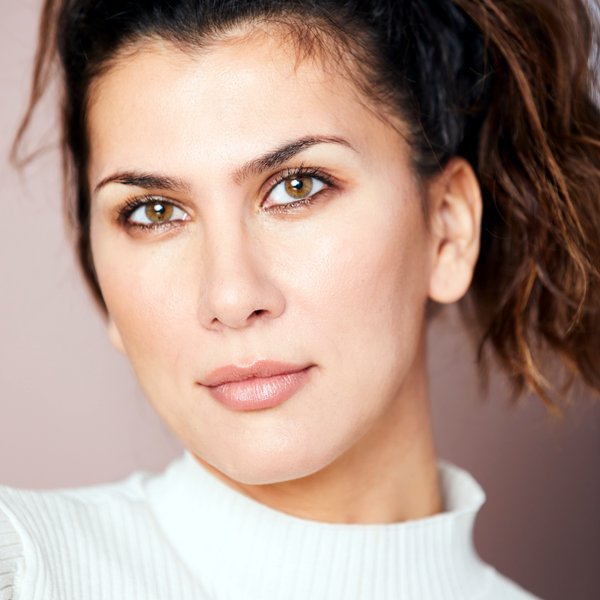
A performance and voice-coaching background shapes Sofia's English and German lessons. She also teaches Greek on the side.
Specialties
"Mittlere Reife", Germany equivalent to High School in the US
I'm passionate about empowering others to discover the beauty and practicality of new languages and cultures. Whether through traditional teaching, creative exercises, or immersive experiences, I’m eager to help you on your learning journey!
Specialties
Personally vetted · Strommen’s note
A performance and voice-coaching background shapes Sofia's English and German lessons. She also teaches Greek on the side.

Συνομιλία — culture & slang
5 cues that mark Modern Greek you actually hear
These are not vocabulary items so much as the small details that mark a learner who has spent time in Greece from one who has only studied the language. Save the list. Then book a tutor for the dialogue that uses them.
-
01
Siga siga (σιγά σιγά)
Literally "slowly slowly," and the cultural stance toward time that runs through how Greeks plan, eat, and converse. More than a phrase; a posture. A learner who internalizes siga siga stops fighting Greek timing and starts moving with it. The phrase shows up in advice, in encouragement, in apology, and in the patient way a Greek host extends a meal.
e.g. Stranger to a hurried traveller: "Σιγά σιγά, θα φτάσεις." ("Slowly, slowly, you'll get there.")
-
02
Yiámas (γειά μας) and the meze rhythm
The universal Greek toast, literally "to our health." It is repeated as glasses are refilled, which in a real meze evening is often. Greek drinking culture is anchored in food and conversation: ouzo or tsipouro arrives with small plates that arrive in waves, and an evening that started at nine can easily reach one in the morning without anyone noticing. The drinking is paced, the company is the point.
e.g. Glasses raised: "Γειά μας!" Reply: "Γειά μας, να μας ζήσεις."
-
03
Filotimo (φιλότιμο)
The untranslatable Greek virtue, roughly "love of honor," but lived as a personal sense of duty, generosity, hospitality, and integrity toward family, friends, and strangers. A Greek host who feeds a guest past fullness is acting from filotimo. A Greek who refuses payment for a favor is acting from filotimo. Recognising the moves that express it is part of reading Greek culture from the inside.
e.g. When you offer to pay your host back for a generous gesture and they refuse without hesitation, you are seeing filotimo in real time.
-
04
Namedays, more than birthdays
Most Greeks are named for an Orthodox saint, and the day honoring that saint is the namesake's nameday. Often celebrated more than the actual birthday. Friends, family, and acquaintances call or message on the nameday with chronia polla ("many years"), and many people host an open house. A learner whose Greek partner or family member has a major-saint name needs to know the relevant nameday or face a small social misstep every year.
e.g. On October 26th (Saint Demetrios's day), every Dimitris you know gets a call: "Χρόνια πολλά, Δημήτρη!" ("Many years, Dimitri!")
-
05
The Greek alphabet is the parent of the Latin one
Twenty-four letters, older than the Latin alphabet (which descended through Etruscan), and the source of an enormous slice of English scientific and academic vocabulary. The handful of letters that look like English (Α, Β, Ε, Η, Ι, Ν, Ο, Ρ, Τ, Υ, Χ) and have different sound values are the small traps that catch beginners. The alphabet is a one-to-two week project for an adult, after which it stops being a barrier.
e.g. Greek Ρ is the English R, not the English P. Greek Η is a long I (ee), not an H. Greek Χ is a kh sound, not an X.
About Conversational Greek
Modern Greek is its own living language
Modern Greek is the only surviving language in its own branch of the Indo-European family. About thirteen million native speakers, mainly in Greece and Cyprus, with substantial diaspora communities in the US (especially New York, Chicago, and Astoria), Australia (Melbourne has the largest Greek population outside Greece), the UK, Germany, and elsewhere. The language has been spoken continuously for more than three thousand years, with documented evolution from Mycenaean Greek through Homeric, Classical, Koine (the New Testament Greek), Byzantine, and the present Modern form. The alphabet is older than the Latin alphabet, which descended from it through Etruscan, and the language has loaned more words to English and to global vocabulary than any other source. Democracy, philosophy, telephone, telescope, biology, astronomy, theater, and several thousand more all come from Greek, which means an English speaker has been borrowing Greek vocabulary their whole life without knowing it.
The most common American mistake is assuming Modern Greek is ancient Greek, or close to it. Modern Greek is its own living language, and the gap between Classical and Modern Greek is large enough that a fluent Modern Greek speaker reads Homer about as easily as a fluent English speaker reads Chaucer. Less easily, in many cases. The pronunciation has shifted substantially since classical times: the alphabet letters now correspond to sounds different from their ancient values, and the iota, eta, ypsilon, oi, and ei all produce the same /i/ sound in Modern Greek (a phenomenon called iotacism). A learner who studied a year of Classical Greek in college and then arrives in Athens speaks a language that sounds vaguely related to what is being spoken around them. A learner of Modern Greek starts in the right century.
The alphabet is the largest one-time investment in the language. Twenty-four letters, most of them already familiar from mathematics, physics, fraternities, and product names, plus the accent marks that signal stress. Modern Greek spelling is highly regular once you know the rules, which means the alphabet is a one-to-two week project for a focused adult, after which it stops being a barrier and becomes ordinary reading. The handful of letters that look like English (Α, Β, Ε, Ζ, Η, Ι, Κ, Μ, Ν, Ο, Ρ, Τ, Υ, Χ) and have different sound values are the small traps that catch beginners, and a tutor names them on day one.
The grammar is where Greek takes its complexity back. Modern Greek has three grammatical genders (masculine, feminine, neuter), four cases (nominative, genitive, accusative, vocative), and an aspectual verb system distinguishing perfective from imperfective in a way familiar to Slavic-language learners and unfamiliar to most Romance-language learners. The verb morphology is rich, with active and mediopassive voices, several tenses, and irregular forms scattered through high-frequency verbs. None of this is unmanageable, but it is real work, and a course that pretends Greek is easy because the alphabet is small is not telling the truth. The estimated hours to reach professional proficiency from English, per the FSI, are about the same as for French or Spanish, just with the effort distributed differently.
The spoken language has its own register that textbooks underplay. Καλημέρα (kaliméra, good morning) and καλησπέρα (kalispéra, good evening) anchor the day. Γειά σου (yia sou) and γειά σας (yia sas) are the casual and respectful versions of hello and goodbye, and the choice signals relationship the way shoma and to do in Persian. The famous siga siga ("slowly slowly") is more than a phrase; it is a stance toward time that runs through how Greeks plan, eat, and converse. A learner who internalizes siga siga stops fighting Greek timing and starts moving with it. The drink-and-meze culture, where ouzo or tsipouro arrives with small plates of food and the evening lengthens organically, is a real cultural register that travellers and learners walk into often. Yiámas ("to our health") is the universal toast, repeated as the glasses are refilled.
Filotimo (φιλότιμο) is the word every Greek will tell you cannot be translated. The rough English is "love of honor," but the lived sense is closer to a personal sense of duty, generosity, hospitality, and integrity that a Greek person is expected to embody toward family, friends, and strangers alike. A guest at a Greek table is fed past the point of fullness because filotimo demands it. A Greek who does someone a favor refuses payment because filotimo would not allow taking it. A learner who hears the word in the first month and starts noticing the moves that express it has begun to read Greek culture from the inside rather than translating it from the outside.
Namedays are the other piece worth knowing early. Most Greeks are named for a saint, and the day in the Orthodox calendar honoring that saint is the namesake's nameday, often celebrated more than the actual birthday. Friends, family, and acquaintances call or message on the nameday with chronia polla ("many years"), and many people host an open house where anyone can drop by. A learner whose Greek partner or family member has a major-saint name (Yiannis, Maria, Georgios, Eleni, Dimitris) needs to know the relevant nameday or face a small social misstep every year. Tutors fold this into vocabulary and listening practice when the calendar makes it relevant.
There is also the religious and historical layer that no Modern Greek lesson can fully separate from the language. The Greek Orthodox Church carried Greek through the Byzantine centuries and through Ottoman rule, when the language was forbidden in public administration and survived through churches and monasteries. The vocabulary of religious life, of liturgical Greek, and of saint names is woven through everyday speech in ways a learner can recognize but not fully unpack from a textbook. A tutor names this context when it matters, so a learner understands why certain words carry the weight they do.
Who learns Greek with us. Strommen sees heritage learners with Greek or Greek-American grandparents reconnecting with the language, partners of Greek speakers preparing for family visits to Athens or the islands, travellers who fell in love with Greece on a trip and committed to learning the language properly, and an occasional student of comparative literature or theology adding Modern Greek to a Classical-Greek background. Each has a different starting point and finish line. A good conversational tutor will not run them through the same lesson plan.
Our Conversational Greek tutors are native speakers from Athens, Thessaloniki, Crete, Cyprus, and elsewhere, alongside longtime bilingual teachers experienced with how English speakers actually stall in Greek. They calibrate to your goal at the trial, build the lesson plan around it, and adjust as you progress. You can also browse the wider Strommen tutor directory.
What you'll cover
Lessons & classes tailored to Conversational Greek
The alphabet, in one to two focused weeks
Modern Greek's 24-letter alphabet is the largest one-time investment in the language and a smaller one than most learners expect. Lessons cover the letter shapes, the sound values (including the iotacism cases where iota, eta, ypsilon, oi, and ei all produce the same /i/), and the accent marks that signal stress. Modern Greek spelling is highly regular once you know the rules, which makes the alphabet a one-to-two week project for a focused adult. After that the system stops being a barrier and becomes ordinary reading.
Cases, gender, and the aspectual verb system
Greek has three genders, four cases, and an aspectual verb system distinguishing perfective from imperfective in every verb pair. None of this is unmanageable, but it is real work, and lessons drill it consistently from the first month rather than postponing it. The vocative case shows up immediately in addressing people by name, which makes it the fastest case to internalize. The other three settle in over the first six months. The aspectual distinction takes longer and is the feature most adult learners spend the most time on.
Spoken register: siga siga, yiámas, filotimo, and the kafeneio rhythm
Real Greek conversation runs on a layer of stance words and politeness moves that textbooks skim. Siga siga as a time stance, filotimo as a cultural posture, the meze and yiámas rhythm that paces an evening, the religious and seasonal vocabulary woven through everyday speech. Lessons treat this layer as core content rather than bonus material, because it is what separates correct Greek from natural Greek.
Listening at island and city speeds, both
Greek varies in pace and slang between Athens, Thessaloniki, Crete, the Cyclades, the Dodecanese, Cyprus, and the rest. Lessons use real audio from Greek podcasts, news, music, and film, with shadowing exercises so the rhythm becomes automatic. A learner who can follow Athenian speed and Cretan accent has effectively prepared for any conversation they will hit in Greece. Cypriot Greek is treated separately when the student's goal is Cyprus, because the dialect differences are real.
FAQ
About Conversational Greek lessons & classes
Is Modern Greek the same as Ancient Greek?
No. They are the same language across more than three thousand years of continuous evolution, in roughly the way English and Old English are the same language. A fluent Modern Greek speaker reads Homer about as easily as a fluent English speaker reads Chaucer. Less easily, in many cases. The alphabet is the same, much of the vocabulary is recognisable, and the grammar has changed considerably. A learner of Modern Greek can engage with classical texts more easily than someone with no Greek, but Modern Greek is its own living language and the right starting point for almost anyone whose goal is contemporary Greece.
How hard is Modern Greek for an English speaker?
The US Foreign Service Institute estimates Modern Greek at about 1,100 hours to reach professional proficiency from English, which puts it in the same bracket as French and Spanish. The alphabet is the visible difficulty, and it is also the smallest piece. The grammar (three genders, four cases, aspectual verbs) is where the actual work lives. Honest answer: Greek is moderately challenging, not exotic, and the consistency of the language rewards consistent practice.
How long does it take to learn the Greek alphabet?
About one to two weeks of focused practice for an adult, then ordinary use. The 24 letters have predictable sound values once you know the rules, and Modern Greek spelling is highly regular. The small traps are the letters that look like English (Ρ, Η, Χ, Υ) and have different sound values, plus the iotacism cases where five different spellings all produce the same /i/ sound. A tutor flags these on day one. By the end of the first month most learners are reading Greek aloud comfortably.
Will Modern Greek help me with Classical Greek or Biblical Greek?
Yes, more than learners often expect. The alphabet is the same, the core vocabulary is recognisable, and most of the morphological complexity that defines Classical Greek (dative case, optative mood, the dual number) is gone in Modern Greek but easier to add later if you have the modern language as a foundation. Many seminary and classics students do this in reverse order: Classical first, then Modern. Either order works, and going modern first gives you a living speech community to practice with rather than only texts.
Is filotimo real, or a tourist-brochure cliché?
Real, and central to how Greeks actually relate to people. Filotimo is the word for a personal sense of duty, generosity, hospitality, and integrity that a Greek is expected to embody toward family, friends, and strangers. You will see it in real time when a host feeds you past fullness, when a stranger refuses payment for a favor, or when a Greek friend goes far out of their way for something you would never have asked for. A learner who recognises the moves that express filotimo reads Greek culture from the inside rather than translating it from the outside.
Are your Greek tutors native speakers?
Most are native speakers from Athens, Thessaloniki, Crete, Cyprus, and elsewhere in the Greek-speaking world. A few are longtime bilingual teachers who grew up between Greece and the diaspora, fully fluent and culturally calibrated. Each tutor's bio specifies background and region. For conversational practice, what matters most is a tutor who can hear what is keeping your Greek from sounding natural and diagnose it specifically.
Can I take Greek lessons online?
Yes. Most of our Greek tutors teach online via Zoom or Jitsi and work with students worldwide, which fits this specialty well since the lesson is mostly speaking and listening. A few teach in person around Los Angeles when schedules align. The booking widget on each tutor profile shows the available formats and live availability.
I am a heritage speaker with grandparents in Greece. Is this the right specialty?
Often the right starting point. Heritage learners usually have a strong passive ear from family conversations and very little active production, plus a feeling that their grandparents would have opinions about how they speak. A conversational tutor builds on the listening you already have rather than starting from zero, which is much faster than a beginner course. Most heritage learners are functional in real conversation within a few months once they start producing the language regularly.
Ready for Conversational Greek lessons or classes?
Book a free 30-minute trial with one of our personally vetted tutors. Private lessons or small-group classes — your choice.