



Personally vetted instructors
Italiano Antico / Volgare tutors, lessons & classes
Salve The Latin-rooted greeting the medieval Tuscan literati actually used. The everyday <em>ciao</em> would not have been recognizable to Dante or Petrarch in their own century.
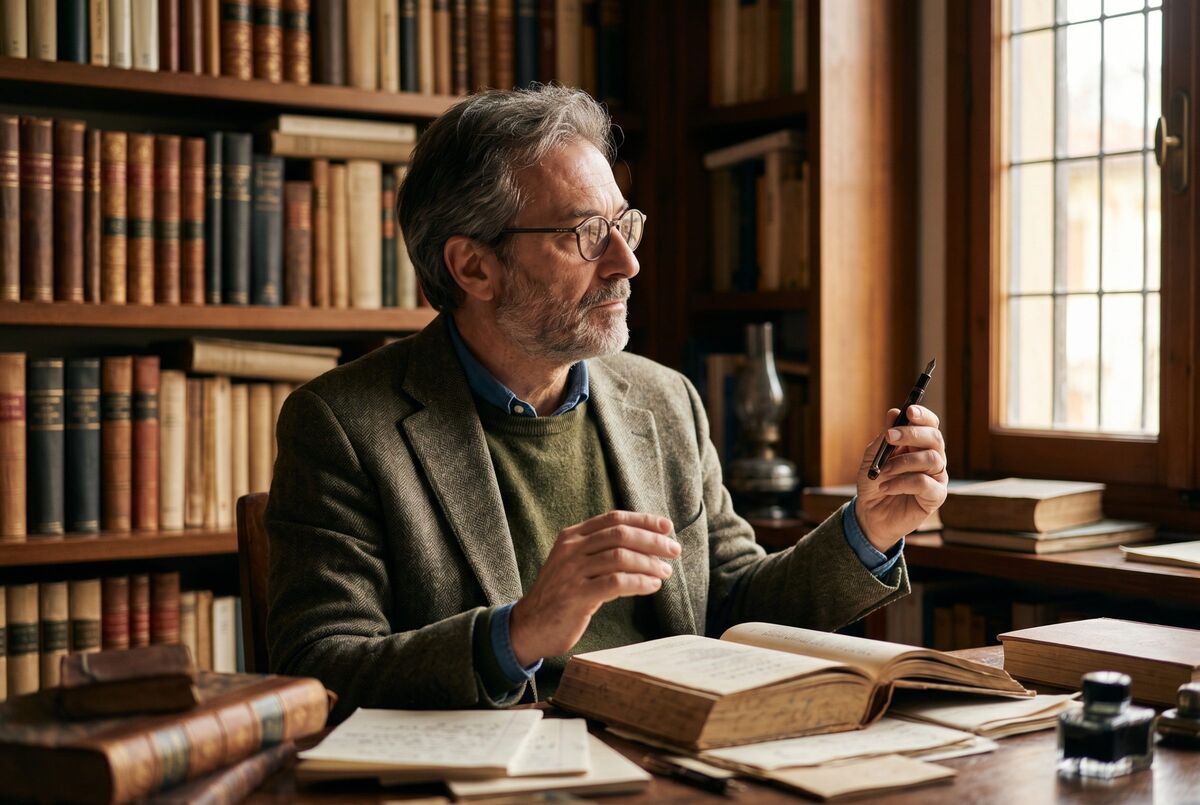
Personally vetted tutors in Italiano Antico (Old Italian, the volgare of the 13th and 14th centuries). Dante, Petrarch, Boccaccio, the Scuola Siciliana, and the broader Stilnovo corpus, taught with the philological seriousness the material deserves.
Your instructors
Italiano Antico / Volgare tutors for private lessons & classes
Italiano Antico is one of the most specialized offerings on the Strommen roster. The tutor pool is small and selected for serious philological depth, with priority given to scholars and to native Italian speakers with formal training in medieval Italian literature and historical linguistics. Every tutor below was met and vetted by us in person or via thorough video interview. No marketplace, no automated profile-creation.
Filter by location, age, or price. Then book a 30-minute free trial.
Below are the Strommen tutors who teach Italiano Antico. Photos, ratings, and rates are real. Click any card to read their bio and book a free 30-minute trial.
I want to learn…
Every tutor, personally met. — founder-vetted since 2006, in Los Angeles and online worldwide.
Get a personalized plan
Pick your language — a language advisor will match you with the right tutor and map out your path.



degree in tourism
Just do it
Personally vetted · Strommen’s note
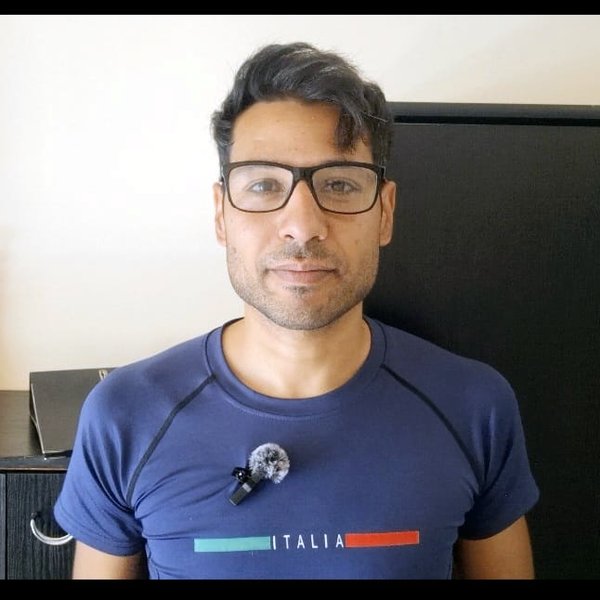
Edgar teaches Venetian dialect and Italiano Antico Volgare, old vernacular Italian, genuinely unusual specialties alongside standard conversational Italian.
Specialties
Also speaks: English, French, Spanish
degree in tourism
Just do it
Specialties
I also speak: English, French, Spanish
Personally vetted · Strommen’s note
Edgar teaches Venetian dialect and Italiano Antico Volgare, old vernacular Italian, genuinely unusual specialties alongside standard conversational Italian.

Volgare — language & literature
5 things every Italiano Antico student should know
Five anchors a serious medieval Italian tutor returns to in the first lessons, because each one reframes what the volgare is and how it relates to the modern Italian most students arrive with. Screenshot to share.
-
01
Dante's Divina Commedia (1308-1320)
The central text of Italiano Antico and the work most adult learners arrive wanting to read. Composed in the Florentine volgare of Dante's era in terza rima, the Commedia draws on Latinate scholarly vocabulary, Provençal troubadour loan-vocabulary, Scholastic theological terminology, and the colloquial Florentine of Dante's daily speech in carefully calibrated registers. Reading it in the original requires a serious annotated edition.
e.g. <em>Nel mezzo del cammin di nostra vita</em> (Inferno I.1).
-
02
The Scuola Siciliana
At the 13th-century court of Frederick II in Palermo, Giacomo da Lentini, Pier delle Vigne, and the wider poetic circle wrote the first significant body of Italian-vernacular poetry in a literary Sicilian volgare, inventing the sonnet form in the process. Their corpus was transmitted largely through Tuscan-scribe copying that adapted the original Sicilian to Tuscan-Florentine phonology, establishing the formal conventions later Tuscan generations built on.
e.g. Giacomo da Lentini's sonnets, the foundational corpus of Italian-vernacular poetry.
-
03
The Stilnovo and the philosophy of love
The dolce stil novo, Dante's own coinage in Purgatorio XXIV, named the late-13th-century Bologna-and-Florence poetic movement led by Guido Guinizzelli and including Guido Cavalcanti, Dante, and Cino da Pistoia. The Stilnovo treatment of love as ennoblement, with the woman as agent of the lover's spiritual elevation, shaped Petrarch and through him the entire European lyric tradition.
e.g. Cavalcanti, <em>Donna me prega</em>; Dante, <em>Tanto gentile e tanto onesta pare</em>.
-
04
Petrarch's Canzoniere
Francesco Petrarca's Rerum vulgarium fragmenta, completed in the 1370s, established the Petrarchan model that dominated European love-poetry for three centuries. The language is more codified than Dante's Florentine, with the deliberate stylistic restraint and Latinate elegance Petrarch carried into his vernacular from his deep Latinist background. An unusually rewarding text for learners building a serious foundation in literary Italiano Antico.
e.g. <em>Voi ch'ascoltate in rime sparse il suono</em> (RVF 1).
-
05
Volgare versus modern Italian
Italiano Antico and modern standard Italian are the same language family with seven centuries of continuous transmission, but the distance is real and the lexicon, syntax, verbal morphology, and phonological patterns of the medieval language all differ from the modern in ways that require philological work to bridge. Pretending modern Italian "reads" Old Italian without annotated editions is a category error.
e.g. Modern Italian descends from medieval Tuscan-Florentine, but the two are not identical.
About Italiano Antico / Volgare
Dante's language, before it became Italian
Italiano Antico (Old Italian, also called volgare, the language of the people as distinct from medieval ecclesiastical Latin) is the literary vernacular of the Italian peninsula in the 13th and 14th centuries: the language Dante Alighieri used to write the Divina Commedia (composed 1308-1320), the language Francesco Petrarca used for the Canzoniere (the Rerum vulgarium fragmenta, completed in the 1370s), the language Giovanni Boccaccio used for the Decameron (1349-1353), and the language of the Sicilian and Tuscan poetic schools that established Italian vernacular literature as a serious medium during the 13th century. This is not modern Italian, and it is not Latin: it is the medieval vernacular that became the basis of modern standard Italian through the Florentine literary tradition that the Accademia della Crusca codified in 1583. For students approaching this material in 2026, the language is closer in many respects to modern Italian than Anglo-Saxon is to modern English, but the distance is real and growing as standard Italian itself continues to evolve.
The Scuola Siciliana sits at the historical origin of Italian vernacular literature. At the 13th-century court of Emperor Frederick II of Hohenstaufen in Palermo, a group of poets including Giacomo da Lentini (the notary credited as the inventor of the sonnet form), Pier delle Vigne, Stefano Protonotaro, and Cielo d'Alcamo wrote in a literary Sicilian volgare that became the first significant body of Italian-vernacular poetry. Their corpus, transmitted largely through Tuscan-scribe copying that introduced Tuscan-Florentine phonological adaptations to the original Sicilian texts, established the formal conventions (the sonnet, the canzone, the courtly-love thematic complex inherited from Provençal troubadour poetry) that the subsequent Tuscan generations would build on. The Stilnovo (the dolce stil novo, "sweet new style," Dante's own coinage in Purgatorio XXIV) emerged in Bologna and Florence in the late 13th century with Guido Guinizzelli as its founding figure and Guido Cavalcanti, Dante, and Cino da Pistoia as its central voices. Reading Stilnovo poetry in Italiano Antico is reading the foundational vocabulary of European love-poetry as it took shape, with the specifically philosophical Stilnovo treatment of love (love as ennoblement, the woman as agent of the lover's spiritual elevation) that would shape Petrarch and through him the Renaissance and the entire European lyric tradition.
Dante's Divina Commedia is the central text of Italiano Antico and the work that most adult learners arrive wanting to read. Composed between roughly 1308 and 1320 in the Florentine volgare of Dante's era, the Commedia's linguistic profile is closer to modern Italian than the Sicilian-school texts that preceded it but still demonstrably medieval in its grammar, its lexicon, its syntax, and its rhetorical conventions. The terza rima form (the interlocking three-line stanzas Dante developed for the poem) carries its own metrical and rhyming discipline that the language adapts to. The lexicon draws on Latinate scholarly vocabulary, Provençal loan-vocabulary from the troubadour tradition, theological and philosophical terminology from the Scholastic tradition Dante engaged with directly, and the colloquial Florentine of Dante's own daily speech in specific registers within the poem. Reading the Commedia in the original requires the philological apparatus of a serious annotated edition (the standard Italian scholarly editions are those of Petrocchi, Sapegno, Singleton's bilingual edition for English-speaking readers, and the more recent commentary tradition through Hollander, Inglese, and Robert Hollander's online Princeton Dante Project for ongoing reference).
Petrarch's Canzoniere sits at the other pole of the 14th-century vernacular literary canon. Where Dante's Commedia is encyclopedic, theological, political, and stylistically various, Petrarch's Rerum vulgarium fragmenta is lyric, personal, philosophically introspective, and stylistically unified in a way that established the Petrarchan model that would dominate European love-poetry for the next three centuries. The language of the Canzoniere is in some respects more codified and less variable than the Florentine of Dante; Petrarch's deliberate stylistic choices produced a literary Italian that approaches the standard the later codifiers would treat as model. The famous non far come la mia donna fa register, the elegiac restraint, the Latinate elegance that Petrarch carried into his vernacular work from his deep Latinist scholarly background, all make the Canzoniere an unusually rewarding text for learners building a serious foundation in literary Italiano Antico. Boccaccio's Decameron, the third pillar of the Tre Corone canon, offers prose rather than verse and a narrative breadth that exposes learners to a different register of the medieval vernacular: the language of storytelling, of urban Florentine life, of the plague year of 1348 and the responses to it, of commerce and travel and the mercantile classes of 14th-century Florence.
The modern study of Italiano Antico as an academic field has its own institutional anchors. Italian university philology programs treat the medieval vernacular as a serious specialization, with reference grammars from Castellani's Grammatica storica della lingua italiana, Migliorini's Storia della lingua italiana, and the more recent contributions through Bruni and the contemporary historical-linguistic literature. The Crusca's ongoing lexicographic work, the Tesoro della Lingua Italiana delle Origini (TLIO) project, and the broader digital humanities work on medieval Italian texts supply ongoing scholarly resources. For learners approaching the field as a Renaissance studies or Italian literature graduate research interest, the resources are unusually deep. For learners approaching the material as informed adult readers wanting to engage with Dante, Petrarch, or Boccaccio in the original, the resources are also accessible: good annotated editions, paraphrase translations alongside the original, and ongoing scholarly support through the Dante Society of America and equivalent international organizations make sustained reading work practical.
What tutors find catches Italiano Antico learners most often is the relationship between the medieval vernacular and modern standard Italian. The two are demonstrably the same language family, with continuous transmission across seven centuries, and modern Italian is essentially the medieval Tuscan-Florentine vernacular plus seven centuries of evolution. But the distance is real, and pretending that modern Italian "reads" Old Italian without philological work is a category error. Specific differences include: the Old Italian lexicon contains many words modern Italian has lost or shifted in meaning (the famous cotale, siffatto, cotanto register that 19th-century Manzoni already had to gloss for contemporary readers), the syntax of medieval Italian uses sentence structures modern Italian does not produce (especially the syntax of legal and theological prose, and the inverted word-orders of high-register verse), the verbal morphology retains certain Latinate features modern Italian simplified (the passato remoto as the dominant past tense in narrative contexts where modern Italian prefers the passato prossimo, the third-person verb endings in specific patterns), and the phonological patterns of medieval Florentine differ from modern Florentine in ways that matter when reading texts aloud in their reconstructed historical pronunciation.
A few honest tutor observations on what tends to work in Italiano Antico lessons. Begin with the importance of a strong modern Italian foundation as the starting point. Coming to Italiano Antico without prior modern Italian is technically possible but inefficient, since the modern language is the natural entry point and the medieval language is reached through historical-linguistic comparison. Choice of anchor text is the next pedagogical decision: most students focus on Dante or Petrarch as the canonical entry point, with Boccaccio's prose as a secondary register. Trying to absorb the Scuola Siciliana, the Stilnovo, Dante, Petrarch, and Boccaccio in parallel produces a generic medieval Italian that no specific period or author produced. Committing to one text and one author at a time builds depth rather than breadth, and the breadth comes from the depth. Philological discipline becomes the working method: lessons use annotated editions throughout, the tutor explains the medieval grammar and lexicon as it appears in the text, and reading slowly with the apparatus is the standard pace rather than fast extensive reading. Rhythmic and metrical attention runs alongside that work: terza rima, the canzone, the sonnet, and the other medieval Italian verse forms have their own metrical discipline, and reading aloud in reconstructed historical pronunciation is part of the work for any serious learner.
The Strommen Italiano Antico roster is highly specialized. Native Italian speakers with formal philological training, Italian literature scholars with active research programs in medieval Italian, and Renaissance and medieval studies professors with documented teaching experience make up the available pool. Lessons are one-on-one and built around a specific anchor text and author: Dante for most students, Petrarch and Boccaccio for those approaching the lyric and narrative traditions specifically, the Scuola Siciliana and Stilnovo for advanced students working backward into the historical foundations. The trial is free. For broader Italian needs, our Italian literature specialty covers post-medieval and contemporary Italian literary work, our Italian academic writing page handles graduate-level writing support, and the Italian course page shows the broader family of programs. Bring whatever motivates you to study to the trial: a Dante canto you have been circling, a Petrarch sonnet you want to read in the original, a graduate research project, a question about why the Scuola Siciliana matters. The tutor takes it from there.
What you'll cover
Lessons & classes tailored to Italiano Antico / Volgare
Dante as the central anchor text
Reading the Divina Commedia in the original with serious philological apparatus: terza rima as a metrical discipline, the Latinate-Provençal-Scholastic-colloquial register mixing within the poem, the medieval Florentine grammar and lexicon, and the rhetorical conventions of medieval Italian verse. The standard annotated editions (Petrocchi, Sapegno, Singleton, Hollander, Inglese) supply the descriptive frame, and the lessons read slowly canto by canto.
Petrarch, Boccaccio, and the Tre Corone canon
The Canzoniere as the canonical lyric anchor and the Petrarchan model that shaped European love-poetry for centuries. Boccaccio's Decameron as the narrative prose anchor, exposing learners to the language of storytelling and urban Florentine commercial life in the 14th century. The full Tre Corone canon as the foundation of Italian vernacular literature.
The Scuola Siciliana and the Stilnovo
The 13th-century Sicilian poetic school at Frederick II's Palermo court as the historical origin of Italian-vernacular poetry, with the sonnet invented by Giacomo da Lentini and the corpus transmitted through Tuscan-scribe copying. The Stilnovo movement in Bologna and Florence, with Guinizzelli, Cavalcanti, and Dante as the central voices and the philosophical treatment of love as the defining intellectual feature. Useful for advanced students approaching the historical foundations.
Historical linguistics and philological method
Castellani's Grammatica storica della lingua italiana, Migliorini's Storia della lingua italiana, the Crusca's TLIO project, and the broader contemporary historical-linguistic scholarship as the descriptive frame. The lexicon, syntax, and verbal morphology of medieval Italian taught alongside the texts, with attention to the reconstructed historical pronunciation for verse reading. Useful for graduate students and serious adult learners pursuing the field as a scholarly specialty.
FAQ
About Italiano Antico / Volgare lessons & classes
What exactly is Italiano Antico?
The literary vernacular of the Italian peninsula in the 13th and 14th centuries: the language of Dante's Divina Commedia, Petrarch's Canzoniere, Boccaccio's Decameron, and the Sicilian and Tuscan poetic schools that established Italian vernacular literature. Also called volgare, "the language of the people," as distinct from medieval ecclesiastical Latin. The basis of modern standard Italian through the Florentine literary tradition the Accademia della Crusca codified in 1583.
Do I need to know modern Italian first?
Strongly recommended. Coming to Italiano Antico without prior modern Italian is technically possible but inefficient, since the modern language is the natural entry point and the medieval is reached through historical-linguistic comparison. Most students arrive with at least intermediate modern Italian and build the medieval-specific knowledge on top. If you are starting from no Italian, plan on a substantial foundation period in the modern language before serious medieval work.
Can I just read modern Italian translations of Dante instead of learning the original?
You can, and there are good modern Italian paraphrases alongside the standard English translations. But the Commedia's linguistic and rhetorical texture is itself part of the work, and reading Dante in modern paraphrase loses substantial parts of what makes the poem the poem. Serious Dante reading at the graduate-research or informed-amateur level happens in the original with annotated apparatus.
Which medieval Italian text should I start with?
Most students start with Dante, specifically the Inferno, which is the most accessible of the three canticles and the natural anchor for any serious medieval Italian work. Petrarch's Canzoniere is the standard lyric starting point. Boccaccio's Decameron is the standard prose starting point. The Scuola Siciliana and the Stilnovo are usually reached through Dante rather than directly. Tell the tutor your anchor at the trial and the curriculum builds from there.
Are your tutors actually trained in medieval Italian philology?
Yes. The Italiano Antico roster is selected specifically for philological depth, with priority given to Italian university scholars with active research programs in medieval Italian literature, native Italian speakers with formal training in historical linguistics, and Renaissance and medieval studies professors with documented teaching experience. Each tutor's bio specifies background, scholarly specialty, and the student profile they fit best.
I am a graduate student in Italian or Renaissance studies. Can lessons support my research?
Yes, and this is one of the most common student profiles on the roster. Graduate-level work can focus on a specific scholarly question, a primary text in the original, a methodological problem in medieval Italian philology, or dissertation research support. The tutor calibrates to your program's expectations and to the specific texts and questions your work requires.
Can I take Italiano Antico lessons online?
Yes. Most Italiano Antico instruction works well over Zoom or Jitsi, and the global pool of qualified scholars is scattered enough that online is the practical default for most students. In-person lessons in Los Angeles are available when tutor and student schedules align.
Ready for Italiano Antico / Volgare lessons or classes?
Book a free 30-minute trial with one of our personally vetted tutors. Private lessons or small-group classes — your choice.