



Personally vetted instructors
Conversational Urdu tutors, lessons & classes
السلام علیکم Assalamu alaikum. The standard Urdu greeting, used across registers and warmly returned with wa alaikum assalam.
Personally vetted Conversational Urdu tutors. Lessons grounded in the spoken Urdu of Lahore, Karachi, Hyderabad, and the wider South Asian diaspora, with attention to the register and adab the language is famous for.
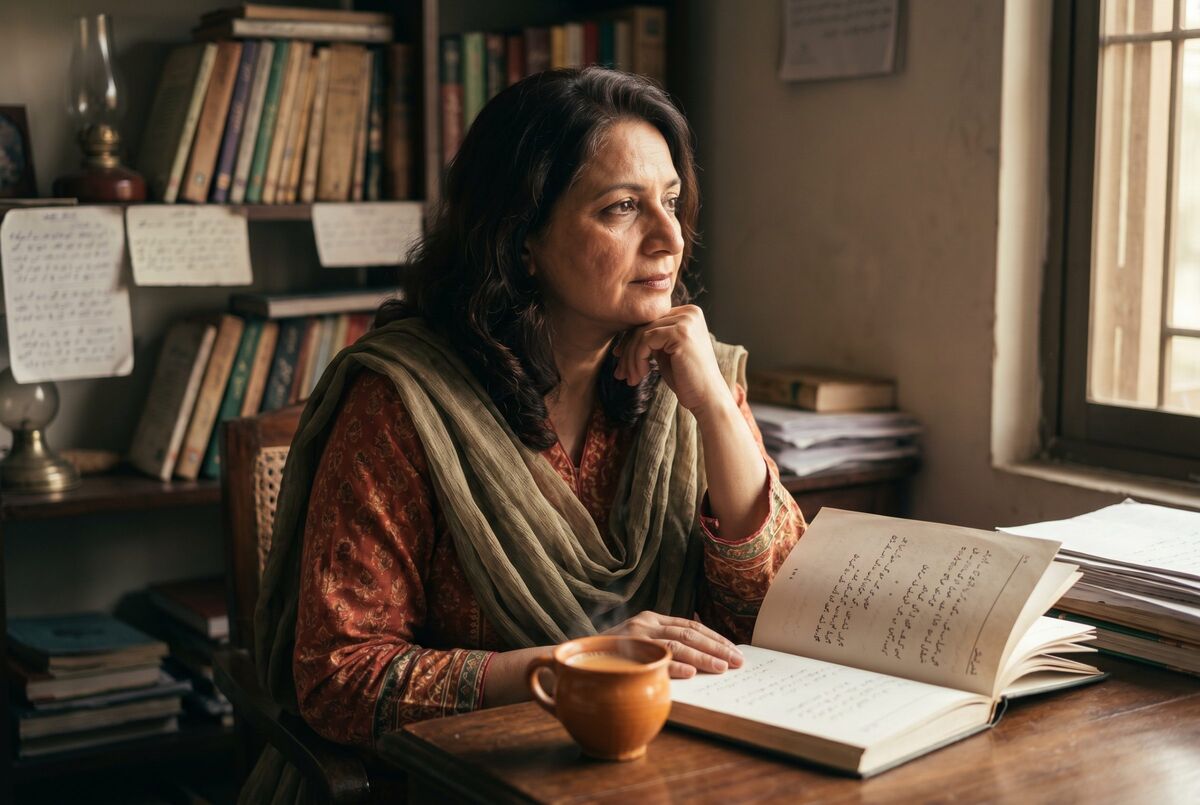
Your instructors
Conversational Urdu tutors for private lessons & classes
Strommen has placed Urdu tutors for years, and the steady ask has always been conversational fluency, with poetry and script-reading as common second goals. Strommen is a curated practice rather than an open marketplace, so every teacher below was met and vetted by us. Bios are the tutors' own.
Filter by location, age, or price. Then book a free 30-minute trial and tell the tutor whether your aim is speaking with family, reading shayari, or both.
Below are the Strommen tutors who specialize in Conversational Urdu. Photos, ratings, and rates are real. Click any card to read a bio and book a free 30-minute trial.
I want to learn…
Every tutor, personally met. — founder-vetted since 2006, in Los Angeles and online worldwide.
Get a personalized plan
Pick your language — a language advisor will match you with the right tutor and map out your path.


Bachelor of arts (Hindi)
Master Hindi with Ritu: Fun, Culture, and Success in Every Lesson - over 1000 classes taught
Specialties
Bachelor of arts (Hindi)
Master Hindi with Ritu: Fun, Culture, and Success in Every Lesson - over 1000 classes taught
Specialties

روزمرہ اردو — daily Urdu
5 things that mark Urdu you actually hear
These are not vocabulary items. They are the cues that separate a learner who has been around Urdu speakers from one who has only worked through a book. Save the list. Then book a tutor to drill them in real dialogue.
-
01
Aap vs tum vs tu
The three Urdu second-person pronouns carry different respect registers, and choosing the right one is the single most important register move in conversational Urdu. Aap is the polite plural, used as a default for anyone older or unfamiliar. Tum is the everyday familiar used with peers. Tu is intimate or, in the wrong context, rude. American learners want to skip past aap; a tutor slows that instinct because warmth in Urdu lives inside the polite register.
e.g. To an elder: Aap kaise hain? (How are you, formal.) To a peer friend: Tum kaise ho? (How are you, familiar.)
-
02
Ji haan / Ji nahin
Yes and no with the respect particle ji attached. Dropping the ji in either makes a student sound flat in a way Urdu speakers feel immediately. The same ji can be added to a name as a polite address (Ahmed-ji, Mariam-ji) or used as a respectful response when called by name. Reaching for ji at the right moment is one of the fastest signs that a learner has been around the language.
e.g. Someone asks: Aap chai piyenge? Answer: Ji haan, shukriya. (Yes, thank you.)
-
03
Insha'Allah, Masha'Allah, Alhamdulillah
The phrases that frame everyday Urdu conversation across the South Asian Muslim community. Insha'Allah ("if God wills") hedges any reference to the future. Masha'Allah ("God has willed it") expresses admiration without inviting the evil eye, especially around children and good news. Alhamdulillah ("praise to God") answers polite how-are-yous and acknowledges any good outcome. Using them naturally reads as someone who has spent time around Urdu speakers.
e.g. Asked how things are: Alhamdulillah, sab theek hai. (Praise to God, everything is fine.)
-
04
Adab and the polished register
Adab is the polished, courteous, slightly elevated way of speaking that Urdu prizes and that runs through the entire spoken culture. It is partly vocabulary, partly grammar, partly posture. The Persian-derived word over the everyday option, the polite plural pronoun over the familiar singular, the softened request over the bare directive. Saying Aadab as a greeting (rather than Assalamu alaikum) is itself a refined choice with literary and Mughal-court resonance.
e.g. Walking into a poetry mehfil: Aadab. (A bowed, refined hello rather than the everyday Assalamu alaikum.)
-
05
Nastaliq, the script
Urdu is written in Nastaliq, a calligraphic Persian-Arabic script that reads right to left. Letters change shape depending on their position in a word, and short vowels are typically not written. Most conversational students spend several months getting comfortable with the script, and many learners run the early lessons in Roman Urdu (Latin-letter transcription) while building the speaking side first. A tutor sequences script work based on the student's actual goal.
e.g. The greeting Assalamu alaikum written in Nastaliq: السلام علیکم, flowing right to left.
About Conversational Urdu
Urdu lives in the spoken register more than any textbook can hold
An honest first lesson in Urdu begins with a piece of context that most beginner courses skim past: spoken Urdu and spoken Hindi, in their everyday colloquial registers, are essentially the same language. They share grammar, share most everyday vocabulary, and a Lahori meeting a Delhi-wala in a market in Dubai can switch into casual conversation immediately. Where they diverge is at the higher registers and on the page. Urdu draws its literary and formal vocabulary from Persian and Arabic; Hindi draws its from Sanskrit. Urdu is written in Nastaliq, a graceful Persian-Arabic script that reads right to left; Hindi is written in Devanagari, which reads left to right. The umbrella name for the shared spoken core is Hindustani. A conversational Urdu learner is not learning a separate language from Hindi at the everyday level, they are learning Hindustani with Urdu's literary tradition, its script, and its specific cultural and religious context attached. Naming this honestly at the start helps a student understand what they are taking on.
What draws most students to Urdu specifically rather than Hindi is some combination of family, faith, and the literary tradition. Heritage Urdu-speakers in the United States, the United Kingdom, Canada, and the Gulf often have parents or grandparents from Pakistan, Bangladesh (especially the Mohajir community), or the Urdu-speaking parts of India. Many South Asian Muslims grow up with Urdu as a religious and cultural language even when their household language is Punjabi, Sindhi, or Bangla. And then there is the poetry. Urdu shayari, the ghazal and nazm tradition that runs from Ghalib and Mir through Faiz and beyond, is one of the great lyric traditions of any language, and a non-trivial number of adult learners come to Urdu specifically because they want to read it in the original. A working tutor calibrates lesson focus to which of these brought the student in.
The spoken register is where conversational lessons live, and the defining quality of Urdu speech is what Urdu speakers call adab: a polished, courteous, slightly elevated way of speaking that prizes elegance and softness. Adab is partly vocabulary (the Persian-derived word reaches for a notch above the everyday option), partly grammar (the polite plural pronoun aap rather than the singular tum, with verb agreement that follows), and partly cultural posture. Urdu greetings are returned warmly, requests are softened with politeness particles, and pleasing turns of phrase are appreciated rather than rushed past. Pakistani students arriving in American workplaces often comment on how blunt American English feels by comparison, and American learners of Urdu need to slow down to match the register the language carries. The famous phrase ji haan (yes, with respect) and ji nahin (no, with respect) are the simplest examples: dropping the ji in either makes a student sound flat in a way Urdu speakers feel immediately.
The shift from tum to aap is the single most important register move conversational lessons drill. Aap is the polite plural, used with anyone older, anyone of higher social standing, anyone you do not know well, and as a default sign of respect even within the family for some speakers. Tum is the everyday plural and familiar singular, used with peers and people younger than yourself once a warm relationship is established. Tu is the deeply intimate or, in the wrong context, the rude singular, used between very close friends or family in some regions and almost never reached for casually. American learners, used to first-name informality as a sign of warmth, often want to skip past aap toward tum and have to be slowed down. Warmth in Urdu lives inside aap, not by abandoning it. A tutor drills this from the first month because nothing flattens a learner's Urdu faster than the wrong pronoun choice.
The everyday cultural and religious phrasing is the next layer. Insha'Allah ("if God wills") frames any reference to the future and is used by religious and non-religious Urdu speakers alike as a normal hedge. Masha'Allah ("God has willed it") expresses admiration without the evil eye, especially around children and good news. Alhamdulillah ("praise to God") answers the polite "how are you" much of the time. Bismillah ("in the name of God") begins many actions. These are not exclusively religious phrases; they are simply the texture of Urdu speech, used across the entire community and recognized everywhere in the South Asian Muslim world. A learner who absorbs them naturally reads as someone who has spent time around Urdu speakers; one who avoids them sounds neutral in a language that is not neutral.
The script question deserves an honest answer. Nastaliq, the calligraphic Persian-Arabic script Urdu is written in, is beautiful and demanding. Letters change shape depending on their position in a word (initial, medial, final, isolated). Short vowels are not normally written, so reading is partly a matter of pattern recognition and known vocabulary. Most adult conversational learners spend several months getting comfortable with the script and many never reach full reading fluency, which is fine for a conversational student. If the goal is primarily speaking and listening, lessons can run in Roman Urdu (Urdu transcribed in Latin letters) for the early months, with Nastaliq added gradually. If the goal includes reading shayari, news, or family letters, the script becomes a real focus and a tutor will sequence the work accordingly.
Most students who come to Conversational Urdu fall into recognizable groups. Heritage Pakistani-Americans and British Pakistanis whose comprehension is strong and whose production is rusty. Partners of Urdu-speakers preparing for in-law family contexts, including the famous and intricate wedding sequence. Adult learners drawn in by the poetry tradition. Researchers and journalists with South Asia-focused work. Adoptees reconnecting with the language as adults. Travelers planning trips to Pakistan or to the Urdu-speaking parts of India. Friends and colleagues supporting South Asian community members in their cities. Each group has a different starting point and a different finish line, and a working tutor adjusts the plan accordingly.
Our Conversational Urdu tutors are native and heritage speakers, several from Lahore and Karachi, several Pakistani-American or British Pakistani teachers in the diaspora, and several with serious experience teaching adult beginners and heritage learners. They calibrate at the trial, build a lesson plan around your actual goal, and update the plan as you progress. Bios on each tutor's profile tell you where they are from and what kind of student they have moved the furthest. The full Strommen tutor directory shows the wider roster if you want to compare options first.
What you'll cover
Lessons & classes tailored to Conversational Urdu
Hindustani as the spoken base, Urdu as the literary and cultural choice
Lessons begin with the honest framing that spoken Urdu and spoken Hindi share an everyday core called Hindustani. From that base, the work layers in what makes Urdu specifically Urdu: the Persian-derived literary vocabulary, the Nastaliq script, the cultural register that runs through the South Asian Muslim community, and the poetry tradition. Students who already understand some Hindi from Bollywood get a real head start on Urdu; students starting fresh build the spoken Hindustani foundation first and then add the Urdu-specific layers.
Aap, tum, tu and the polite-register reflex
The pronoun choice is the single most important register move in conversational Urdu, and lessons drill it from the first month. Aap as default for anyone older, unfamiliar, or in a formal context. Tum for peers in a warm relationship. Tu reserved for the deeply intimate or, in the wrong context, the rude. Verb agreement follows the pronoun choice, so the drill includes the polite plural verb endings that go with aap. A student who controls this register sounds calibrated; one who skips it sounds flat in a language that values softness.
Adab, the everyday Islamic phrasing, and the cultural register
Urdu speech runs on a politeness register (adab) and on a layer of everyday Islamic phrasing (Insha'Allah, Masha'Allah, Alhamdulillah, Bismillah) that frames much of how Urdu speakers actually talk. Lessons fold these in alongside vocabulary because the cultural register is the language. Students preparing for in-law family contexts, for visits to Pakistan, or for community work get extra time on the politeness moves, the wedding-and-family vocabulary, and the religious-cultural phrasing that South Asian Muslim families use across generations.
Script work, calibrated to your goal
Nastaliq is beautiful and demanding, and not every conversational student needs to reach full reading fluency. Lessons calibrate the script work to the actual goal. Students focused on speaking and listening with family run the early months in Roman Urdu (Latin transcription) and add Nastaliq gradually. Students drawn to the language by Ghalib and Faiz get the script as a real focus from early on, because shayari is the goal. For a fuller introduction to the poetry tradition between lessons, our blog post on an introduction to Urdu shayari is a useful starting point (blog post not yet published).
FAQ
About Conversational Urdu lessons & classes
What's the difference between Urdu and Hindi?
At the everyday spoken level, very little. Urdu and Hindi share grammar, share most everyday vocabulary, and are mutually intelligible in casual conversation. They diverge at the higher registers and on the page. Urdu draws its literary and formal vocabulary from Persian and Arabic and is written in Nastaliq. Hindi draws from Sanskrit and is written in Devanagari. The umbrella name for the shared spoken core is Hindustani. A learner who reaches conversational Urdu can speak with Hindi speakers in everyday contexts, with both sides recognizing some vocabulary differences.
Do I have to learn the Nastaliq script?
Only as much as your goal requires. Conversational Urdu students often run the early months in Roman Urdu, the Latin-letter transcription that Pakistani diaspora communities use widely in text messages and social media. If your aim is primarily speaking with family, you can build serious conversational comfort before tackling the script. If your aim includes reading shayari, news, or letters, the script becomes a real focus. A tutor calibrates the work based on what you actually want to use the language for.
How hard is Urdu for an English speaker?
Moderate. The grammar has some challenging features (postpositions instead of prepositions, gendered nouns and adjectives that agree with them, verb conjugations that vary by pronoun and gender), but it is regular and pays off with consistent study. The phonetics include some sounds English does not have (the retroflex consonants, the aspirated stops, the kh and gh sounds borrowed from Persian and Arabic) but they are learnable. Most committed adult students reach conversational comfort within nine to fifteen months at one or two lessons a week with steady practice in between.
I am a heritage Urdu speaker who understands but barely speaks. Is this the right specialty?
Almost always yes. Heritage learners arrive with a strong listening foundation, real vocabulary from family contexts, and an instinctive grasp of the cultural register, and what is missing is active production and confidence in unfamiliar situations. A conversational tutor builds on the listening you already have rather than restarting from beginner one. Many heritage students are functional in conversation within a few months once they begin producing the language regularly. Heritage students drawn to Urdu shayari often add script work as a parallel track because the poetry is the goal.
Are your Conversational Urdu tutors native speakers?
Most are native speakers, several from Lahore and Karachi, with several Pakistani-American and British Pakistani teachers in the diaspora who have spent years working with heritage and adult-beginner learners. Each tutor's bio specifies their background, where they are from, and which kinds of students they have worked with most. For students drawn to the poetry tradition, several tutors specifically teach shayari alongside conversational Urdu.
Can I take Conversational Urdu lessons online?
Yes. Most of our Conversational Urdu tutors teach online via Zoom or Jitsi and work with students worldwide, which suits this specialty well since the lesson is mostly speaking and listening. A few also teach in person in Los Angeles, which has a substantial Pakistani-American community. The booking widget on each tutor profile shows the available formats and live availability.
I'm marrying into a Pakistani family. How much Urdu can I realistically learn before the wedding?
A useful amount. With three to six months of regular lessons, a learner can comfortably handle greetings, mealtime small talk, polite responses to elders, the basic adab register, and enough vocabulary to follow a family conversation. Your tutor builds lessons around the specific situations you will be in (Sunday lunch with the in-laws, the wedding sequence itself, video calls with relatives in Pakistan) so the work is targeted rather than general. Wedding vocabulary in particular (the mehndi, the baraat, the rukhsati, the polite phrasing around gifts) gets a focused pass.
What does a typical Conversational Urdu lesson look like?
Lessons are one-on-one and built around your goal. A session might open with guided conversation in Urdu on a topic you chose, pause for targeted work on a register issue (aap vs tum, the right ji placement, an adab move) that surfaced, add a piece of cultural context when relevant, then close with listening practice on real Urdu audio or shayari recitation. No two students get the same plan. The tutor tracks what you actually want to be able to say and works backward from it.
Ready for Conversational Urdu lessons or classes?
Book a free 30-minute trial with one of our personally vetted tutors. Private lessons or small-group classes — your choice.