



Personally vetted instructors
Tagalog for Beginners tutors, lessons & classes
Magandang araw Beginner-formal: "good day," the safe daytime greeting for any first meeting.
Personally vetted Tagalog tutors who teach absolute beginners. Patient lessons that start with the cultural foundations (po, opo, kuya, ate) alongside the grammar, so you sound polite from the first hello.
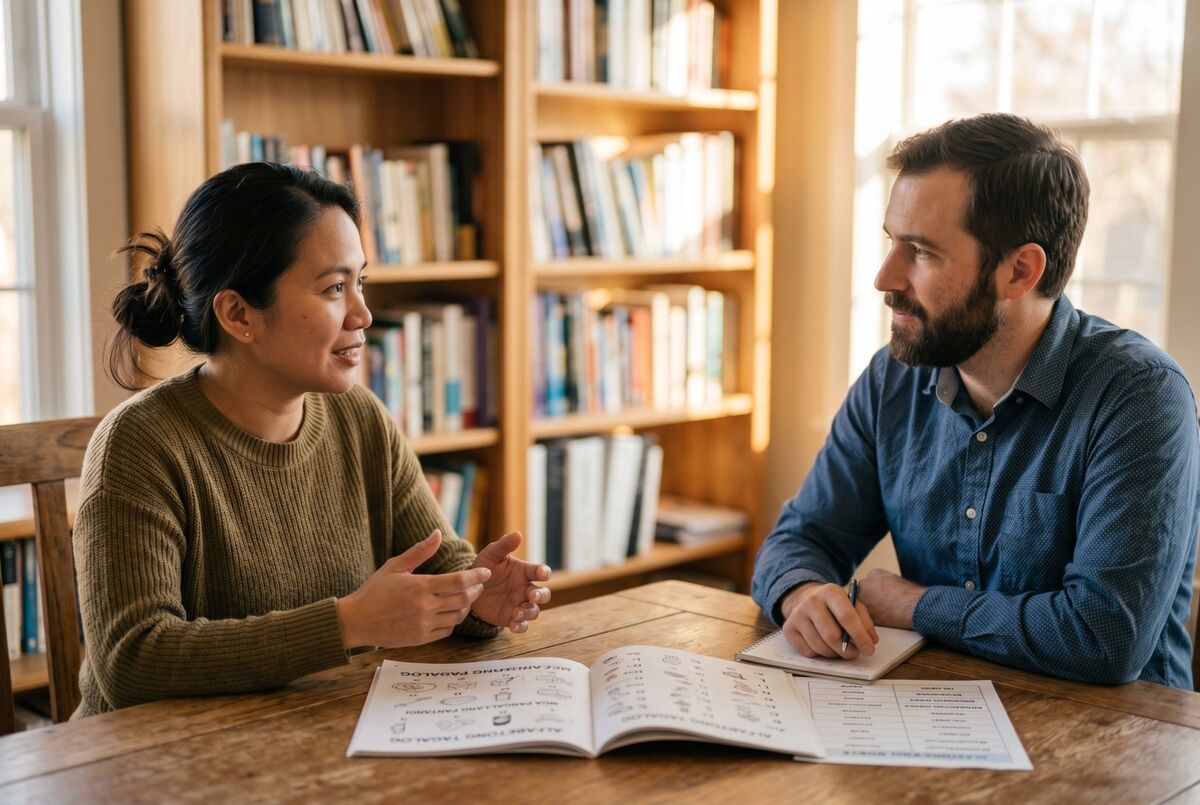
Your instructors
Tagalog for Beginners tutors for private lessons & classes
Strommen has placed Tagalog tutors for years. The steady ask from new students tends to be heritage. Some version of "I want to actually talk to my lola," or "I want to follow what my titas are saying at family parties," alongside students whose partners or in-laws are Filipino. Strommen is a curated practice rather than an open marketplace, so every tutor below was met and vetted by us. The bios are real.
Filter by location, age, or price. Then book a 30-minute free trial.
Below are the Strommen tutors who teach Tagalog to absolute beginners. Photos, ratings, and rates are real. Click any card to read their bio and book a free 30-minute trial.
I want to learn…
Every tutor, personally met. — founder-vetted since 2006, in Los Angeles and online worldwide.
Get a personalized plan
Pick your language — a language advisor will match you with the right tutor and map out your path.



Bachelor's degree in secondary education, majoring in English. Masters degree in English language teaching. · multilingual classroom and TEFL
English and Tagalog Certified Teacher with Masters Degree in English
Personally vetted · Strommen’s note
Princess is a licensed secondary teacher with a Master's in English. She also teaches Tagalog, a genuinely rare pairing on our roster.
Specialties
Also speaks: Spanish
Bachelor's degree in secondary education, majoring in English. Masters degree in English language teaching. · multilingual classroom and TEFL
English and Tagalog Certified Teacher with Masters Degree in English
Specialties
I also speak: Spanish
Personally vetted · Strommen’s note
Princess is a licensed secondary teacher with a Master's in English. She also teaches Tagalog, a genuinely rare pairing on our roster.
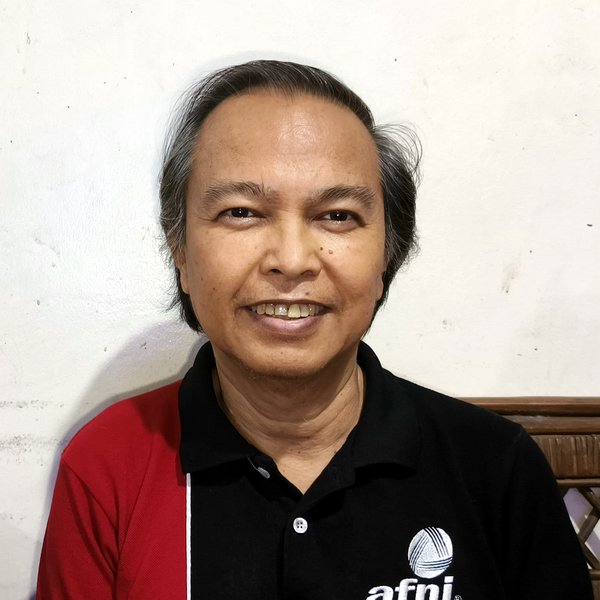
B. S in Biology F. E. U Graduate. Post grad 2nd year proper Medicine NRMF inst of Medicine · N. A
Kuya Rommel from the beautiful country Philippines
Personally vetted · Strommen’s note
Rommel, known to students as 'Kuya,' starts every lesson by pinpointing exactly where someone's stuck, then builds the plan from there.
Specialties
B. S in Biology F. E. U Graduate. Post grad 2nd year proper Medicine NRMF inst of Medicine · N. A
Kuya Rommel from the beautiful country Philippines
Specialties
Personally vetted · Strommen’s note
Rommel, known to students as 'Kuya,' starts every lesson by pinpointing exactly where someone's stuck, then builds the plan from there.

Unang hakbang — first step
5 things to learn in your first month of Tagalog
Five anchors that mark a respectful Tagalog beginner. Save the image. Send it to anyone in your family who has been gently nagging you to finally start.
-
01
Po and opo
Po is the politeness marker dropped into a sentence when speaking with an older person, an authority figure, or anyone deserving of respect. Opo is the polite "yes." Using these correctly in the first month does more for how Filipinos perceive your Tagalog than three months of grammar. Leaving them out with elders is the most common mistake heritage learners make.
e.g. Kumusta po kayo? means "How are you?" said politely to an elder.
-
02
Kuya, Ate, Tito, Tita
Address terms that come before the conjugation tables. Kuya for older brother or any older male you respect. Ate for older sister or older female. Tito and Tita for uncle and aunt, used widely with adult family friends. Using these correctly is half the cultural register of Tagalog. "Hi, kuya" beats "hi, Mark" with someone older.
e.g. Salamat, ate — "Thank you, ate." Said to an older woman, family or not.
-
03
Spanish numbers are hiding in your math
Tagalog has its own numbers (isa, dalawa, tatlo), but in everyday life past ten, Spanish-derived numbers often take over. Time, prices, ages, dates frequently use the Spanish-rooted set. A Spanish speaker will hear quarenta in kuwarenta and recognize fifty in singkuwenta.
e.g. Alas-dose na — "It's twelve o'clock." Alas from Spanish a las.
-
04
The verb tells you what's in focus
Unlike English, Tagalog grammar marks which noun in the sentence is the center of attention by changing the verb form, not by word order. The same idea ("eating rice") can place focus on the eater, the rice, or the location. Beginners do not need to master all the patterns at once — they learn the actor focus first, then the object focus, then the rest comes naturally.
e.g. Kumakain ako ("I'm eating") puts focus on me. Kinakain ko ang kanin ("I'm eating the rice") shifts focus to the rice.
-
05
Indirect-no
Filipinos rarely say a flat "no" in social situations. The cultural register is to soften, defer, or redirect. Hindi po ("no" with politeness marker) is common, but more often you will hear sige na, baka next time, or just a smile and a topic change. Beginners learn to read these cues as the polite refusals they are.
e.g. Baka next time, ate — "Maybe next time," said as a polite decline.
About Tagalog for Beginners
Tagalog with po from day one
The first thing a beginner Tagalog tutor will teach you is a two-letter word: po. It does not translate cleanly into English. It functions as a politeness marker, dropped into a sentence to show respect for an older person, an authority figure, a stranger, or anyone in a service relationship. Saying mahal kita means "I love you." Saying mahal ko po kayo says the same thing to your grandmother, in a way that signals you grew up with manners. Po is not optional in those settings. Leaving it out reads as cold or as a Filipino-American who never quite learned. Beginners who internalize po in the first month sound culturally fluent well before they are grammatically fluent, and that is the right order to learn the language in.
Tagalog has about 30 million native speakers, mostly in the central and southern Luzon regions of the Philippines, and it forms the linguistic base of Filipino, the national language. Filipino is essentially standardized Tagalog with additional vocabulary borrowed from English, Spanish, and other Philippine languages. For a beginner the distinction barely matters in practice. What you learn as Tagalog is what people speak in Manila, in Quezon City, in Bulacan, and across the global Filipino diaspora. The Filipino-American community in the United States is the third largest Asian-American group, with particularly large populations in California, Hawaii, Nevada, and the New York metro area, so the language is genuinely present in American life rather than only relevant overseas.
The second discovery for beginners is the Spanish layer. Three hundred years of Spanish colonization (1565 to 1898) left Tagalog with thousands of Spanish loanwords, often hiding in everyday vocabulary. The numbers in Tagalog above ten are often Spanish-derived (kuwarenta, singkuwenta, treinta). The names of months and days. Words for time, family, religion, food, and government. A Spanish speaker walking into a Tagalog conversation will catch maybe 15 percent of the vocabulary without trying, which is a small gift of history for any beginner who also knows some Spanish. The phonetic spelling, which is essentially Spanish in origin, makes Tagalog one of the most reliably readable languages for an English speaker. There are no spelling tricks, no silent letters, and the stress placement is mostly predictable from the spelling itself.
The grammar surprise is verb focus. Tagalog does not work like English. Instead of marking who is doing the action with subject and object endings, Tagalog marks which noun in the sentence is the focus of attention by changing the verb form. The same action of eating, for example, uses different verb forms depending on whether the sentence is about the eater, the food being eaten, or the place where eating happened. Kumakain (the eater is in focus), kinakain (the food is in focus), kinakainan (the place is in focus). This is unusual enough that beginner tutors spend time on it explicitly, with patient examples, because no other major language teaches an English speaker this kind of grammar. The good news is that beginners only need to master one focus pattern (actor focus) in the first month, then add the others gradually. By month four most students produce all three patterns fluidly in conversation.
The rest of Tagalog is friendlier than you might expect. The alphabet is the Latin alphabet you already know. Spelling is fully phonetic, every letter has one sound, and stress is mostly predictable. There are no genders for nouns. There is no plural agreement to memorize in the European sense. The script is the easy part, the words are mostly two or three syllables, and you can read aloud almost any sentence in the first week. Verbs use a small set of affixes (mag-, -um-, -in, -an) attached to root words, which means once you have learned a hundred roots, you can produce several hundred verbs by combining them with the affixes correctly. The grammar pays back early effort generously.
Taglish, the code-switching between Tagalog and English that defines modern urban Filipino speech, is part of the language a beginner needs to recognize even if they cannot yet produce it. Real conversations in Manila switch between the two languages several times per sentence, often with English carrying the technical or modern vocabulary and Tagalog carrying the structural words, the emotional vocabulary, and the politeness markers. Beginner tutors at Strommen do not pretend Taglish does not exist. They model it appropriately, then taper the English as your Tagalog comfort grows, so that you can choose your register depending on who you are talking to.
Our beginner-track tutors include native speakers from Manila, Quezon City, Cebu (where Tagalog is a second language alongside Cebuano), and the Filipino diaspora in California, plus Filipino-American instructors who learned formally as teachers and remember exactly where beginners stumble. You will see both kinds on the cards below. Most students do well with whichever bio voice feels right for an hour of weekly conversation. Some students book trials with two different tutors to compare styles before committing to a regular schedule, which we encourage.
What you'll cover
Lessons & classes tailored to Tagalog for Beginners
Politeness first, grammar second
In the first three lessons we cover po, opo, kuya, ate, tito, tita, the polite question forms, and the address conventions that mark a respectful Tagalog speaker. This is the cultural foundation that grammar sits on top of. Filipino families and elders notice these markers immediately, which is why heritage learners often feel they made more social progress in two weeks than they did in a year of self-study apps.
Survival vocabulary and the Spanish bridge
Greetings, introductions, family terms, food, ordering at a Filipino restaurant or carinderia, asking directions, basic shopping, and numbers (both the Tagalog set and the Spanish-derived set). If you already speak any Spanish, your tutor will surface the cognates that make the first 500 words easier. If you do not, you will pick them up as a small bonus skill along the way.
Verb focus, taught one step at a time
The verb-focus system is the part of Tagalog grammar most beginners have never seen anywhere else. We teach actor focus first (kumain, kumakain, kakain) because it maps closest to English subject-verb sentences. Object focus comes next, paired with everyday verbs you will actually use. Locative and benefactive focus arrive in month three or four as your sentences naturally call for them.
Real Tagalog versus textbook Tagalog
Beginner lessons mix in real spoken Tagalog from films, kabit-kabit code-switching with English (Taglish), and the small slang words younger Filipinos drop into conversation. We keep the textbook scaffolding for grammar but pair it with how the language actually sounds on Filipino YouTube, in vlogs, and at family parties. If your goals broaden, our conversational Tagalog track picks up where the beginner curriculum ends.
FAQ
About Tagalog for Beginners lessons & classes
Is Tagalog the same as Filipino?
Closely related, not quite identical. Tagalog is the language with roughly 30 million native speakers, originally from central and southern Luzon. Filipino is the official national language of the Philippines, based on Tagalog but with additional vocabulary borrowed from English, Spanish, and other Philippine languages. For a beginner the distinction is mostly academic. What you learn as Tagalog is what people speak in Manila and across the diaspora.
Do I need to learn Tagalog grammar before traveling to the Philippines?
English is widely spoken across the Philippines, especially in cities and in tourist contexts, so a non-Tagalog-speaking traveler can get by. But knowing even basic Tagalog — greetings, po, salamat, the family-address terms — transforms how Filipinos respond to you. Heritage learners particularly find that the first month of lessons opens conversations with family members that simply did not happen before.
How long until I can hold a basic conversation?
Most absolute beginners reach a self-contained first conversation (greetings, introductions, talking about family, ordering food) somewhere in weeks four to eight, at one or two lessons per week. Tagalog rewards beginners early because the spelling is phonetic, the alphabet is familiar, and the politeness markers make small social wins available immediately.
Will my tutor use Taglish in lessons?
At first, yes, on purpose. Real Filipinos code-switch between Tagalog and English several times per sentence, and pretending otherwise would set up a beginner for surprise the first time they hear a real Filipino conversation. Your tutor will gradually shift toward more Tagalog as your comfort grows, but they will keep the Taglish reality visible so you recognize it in the wild.
I am a heritage learner. Should I still take beginner lessons?
Yes. Heritage learners often have receptive understanding (you grasp what your family says) without productive ability (you cannot easily reply). The beginner curriculum at Strommen is structured to honor the receptive base you have while building the productive side, which usually moves faster for heritage learners than for total newcomers. Many tutors note that the politeness markers — po, opo, kuya, ate — are the fastest wins for heritage students.
Can I take Tagalog lessons online or only in person in LA?
Both. Most Tagalog tutors at Strommen teach online via Zoom or Jitsi, available globally. Several teach in person around Los Angeles, where the Filipino-American community is one of the largest in the United States. The booking widget on each tutor's profile shows their available formats. Group introductions sometimes run through our Tagalog classes in Los Angeles program.
What does a Tagalog beginner lesson actually look like?
A typical hour starts with a short conversation in Tagalog (greetings, weekend recap), then 20 to 25 minutes of new vocabulary and grammar built into a small real-world scenario, 15 to 20 minutes of paired practice with the tutor, and a short reading or listening segment using the day's words. Homework runs 20 to 40 minutes between lessons. Each tutor's bio describes their specific style.
Ready for Tagalog for Beginners lessons or classes?
Book a free 30-minute trial with one of our personally vetted tutors. Private lessons or small-group classes — your choice.