



Personally vetted instructors
Conversational Ukrainian tutors, lessons & classes
Привіт! Pryvit. The everyday Ukrainian hello, used freely with anyone you know.
Personally vetted Conversational Ukrainian tutors. Lessons grounded in the Ukrainian people actually speak in Kyiv, Lviv, Kharkiv, and across the global diaspora, not in a Russian course relabeled.
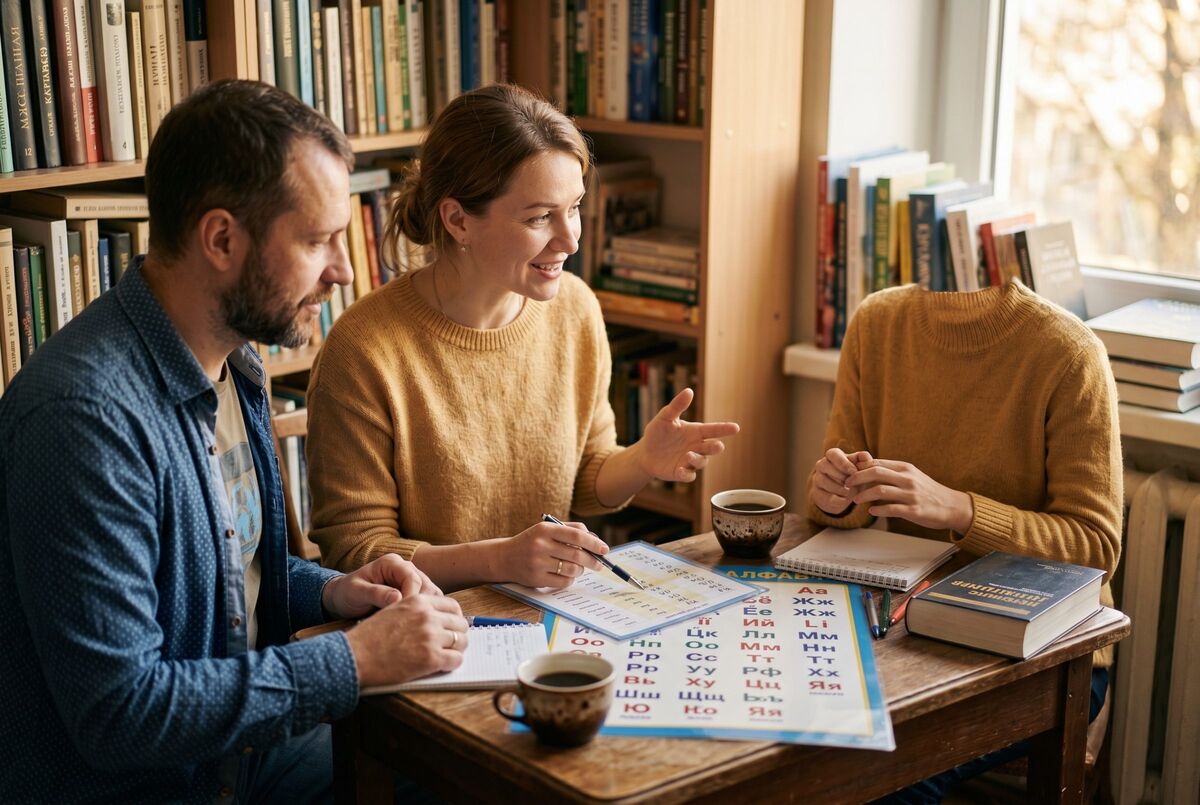
Your instructors
Conversational Ukrainian tutors for private lessons & classes
Strommen has placed Ukrainian tutors for years, and the steady ask has always been conversational fluency rather than academic certification. Strommen is a curated practice rather than an open marketplace, so every teacher below was met and vetted by us. Bios are the tutors' own.
Filter by location, age, or price. Then book a free 30-minute trial and tell the tutor whether you are beginning fresh, reactivating heritage Ukrainian, or transitioning from Russian.
Below are the Strommen tutors who specialize in Conversational Ukrainian. Photos, ratings, and rates are real. Click any card to read a bio and book a free 30-minute trial.
I want to learn…
Every tutor, personally met. — founder-vetted since 2006, in Los Angeles and online worldwide.
Get a personalized plan
Pick your language — a language advisor will match you with the right tutor and map out your path.

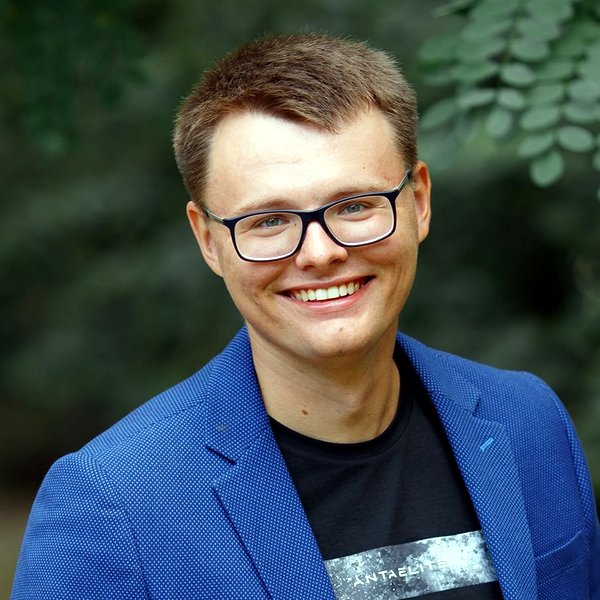

Bachelor degree
Be happy - Learn English!
Personally vetted · Strommen’s note
Kropivnitsky-based, Mykola teaches English and Ukrainian both, with storytelling and role-play built in to make lessons feel like conversation, not class.
Specialties
Bachelor degree
Be happy - Learn English!
Specialties
Personally vetted · Strommen’s note
Kropivnitsky-based, Mykola teaches English and Ukrainian both, with storytelling and role-play built in to make lessons feel like conversation, not class.
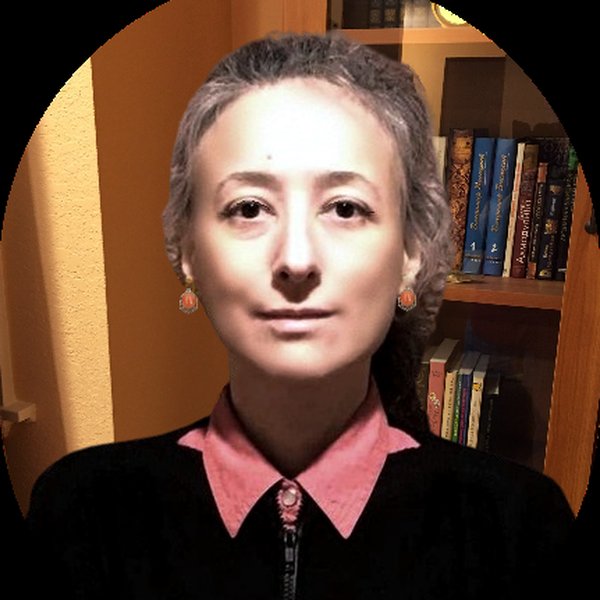
BA in Russian Language and LiteratureBA in English LiteraturePh.D. in Comparative LiteratureCertificate in Teaching Russian as a Foreign LanguageCertificate in Teaching ESL / EFL to Speakers of Other LanguagesCertificate in Teaching Business ESL
Embark on Your Language Odyssey: Expert Guidance from Tatyana, Your Native Speaker & Ph.D
Specialties
BA in Russian Language and LiteratureBA in English LiteraturePh.D. in Comparative LiteratureCertificate in Teaching Russian as a Foreign LanguageCertificate in Teaching ESL / EFL to Speakers of Other LanguagesCertificate in Teaching Business ESL
Embark on Your Language Odyssey: Expert Guidance from Tatyana, Your Native Speaker & Ph.D
Specialties

Щоденна — daily Ukrainian
5 things that mark Ukrainian you actually hear
These are not vocabulary items. They are the cues that separate someone who has been around Ukrainians from one who has only worked through a course. Save the list. Then book a tutor to drill them in real dialogue.
-
01
Привіт / Доброго дня
Pryvit is the casual hello, freely used with friends and peers. Dobroho dnya is the polite version ("good day"). Notice the genitive form: doброго dnya, not dobryi den. Other Slavic languages use the nominative here, and the genitive is a small Ukrainian fingerprint. A learner who reaches for pryvit with friends and dobroho dnya with anyone unfamiliar reads as calibrated rather than stiff.
e.g. Walking into a friend's home: Привіт, як справи? (Hi, how are things?)
-
02
Слава Україні / Героям Слава
Slava Ukraini, Heroyam Slava ("Glory to Ukraine, Glory to the Heroes"). The greeting and response moved from historical and military contexts into broad daily use after 2014 and especially after 2022. A learner does not need to deploy it casually, but should recognize it, know what it means, and understand why it carries the weight it does. Tutors mention it early because the phrase is part of contemporary Ukrainian cultural and political identity.
e.g. An exchange between Ukrainians: Слава Україні! Героям Слава!
-
03
The letters that mark Ukrainian as not-Russian
Ukrainian Cyrillic includes Ї, Є, І, and Ґ, which Russian does not have, and lacks Ы, Ё, Ъ, and Э, which Russian uses. The visual difference is the easiest immediate marker of a Ukrainian text. A learner picking up the language for the first time learns these letters in the first week. A student who already knows Russian Cyrillic transitions across, but needs to drill the new letters and unlearn the missing ones rather than assuming the alphabets are identical.
e.g. The word for Kyiv: Київ (with the Ukrainian Ї), not Киев (the Russian spelling).
-
04
Cases and verb aspect
Ukrainian has seven cases that drive grammatical meaning through the sentence, and verbs come in perfective and imperfective pairs that mark whether an action is completed or ongoing. The grammar is real work for an adult English speaker and the place beginner phrasebook study most often skips. A conversational tutor sequences the most-used patterns first and builds the system through dialogue rather than tables.
e.g. Пишу листа (I am writing a letter, imperfective) vs Написав листа (I wrote / finished the letter, perfective).
-
05
Hospitality and the polite register
Ukrainian hospitality runs through Ukrainian speech: borscht (Ukrainian, not Russian), varenyky, the welcoming bread and salt for honored guests, the way meal toasts (вибудьмо / budmo, "let us be") frame a gathering. The polite address (вибачте for excuse me, the patronymic with first name in formal contexts, the pan and pani titles that returned to common use after independence) carries warmth alongside grammar. Lessons fold these in alongside vocabulary because they are how the language actually lands.
e.g. Toasting at a Ukrainian dinner: Будьмо! Будьмо! ("Let us be! Let us be!")
About Conversational Ukrainian
Ukrainian is its own language, not a Russian dialect
The most important thing for a new student to settle in the first lesson, sometimes the first ten minutes, is that Ukrainian is its own language. It is East Slavic, like Russian and Belarusian, and the three share enough grammatical structure and core vocabulary that someone fluent in one will recognize a great deal of another. They are not the same language. Ukrainian has its own grammar choices, its own pronunciation, and a vocabulary that draws far more from Polish and the wider Central European Slavic world than Russian does. The letters even diverge: Ukrainian uses Cyrillic but with letters Russian does not (Ї, Є, І, Ґ) and does not use letters Russian does (Ы, Ё, Ъ, Э). A student who picks up a Russian textbook expecting it to teach them Ukrainian is in for a frustrating few weeks. Conversational lessons begin from the position that Ukrainian deserves study on its own terms, and that is the honest starting place.
The wider context shaped a generation of new Ukrainian learners. After the full-scale invasion in February 2022, millions of people in Ukraine who had grown up bilingual switched fully to Ukrainian in public and at home as a deliberate civic act. Many more outside the country (children and grandchildren of the wider Ukrainian diaspora, partners of Ukrainians, friends and colleagues, journalists, aid workers) decided to learn the language for the first time. The greeting Слава Україні (Slava Ukraini, "Glory to Ukraine") and the response Героям Слава (Heroyam Slava, "Glory to the Heroes") moved from military and historical contexts into broad daily use and into the international conscience as a phrase of solidarity. A conversational tutor will mention this context not because every lesson needs to dwell on the war but because no honest account of the language right now can pretend the context does not matter.
The grammar asks adult learners for real patience. Ukrainian has seven cases that do active work in the sentence, three genders, verb aspect (perfective and imperfective) the way other Slavic languages do, and freer word order than English. There is no escaping any of this through phrasebook study. The reward is that once the cases settle in, Ukrainian sentences become flexible in a way English never quite manages: the case ending carries the grammatical role, so word order can shift to emphasize what matters. A conversational tutor sequences the most useful patterns first (nominative, accusative, genitive, and the basic perfective and imperfective pairs) and builds the rest of the system in over months through dialogue rather than tables. Most committed adult students reach conversational comfort in nine to fifteen months at one or two lessons a week with steady self-study in between.
The sound system carries the second learning curve. Ukrainian distinguishes hard and soft consonants the way other Slavic languages do, and the soft consonants are marked with a separate letter (Ь, the soft sign) or with the i-class vowels that follow. The г in Ukrainian is pronounced like an English h, not the Russian g; Ukrainian uses a separate letter ґ for the hard g sound on rare occasions. The о vowel stays clearly о rather than reducing to an a-like sound the way it does in Moscow Russian. None of this is impossible. It is the set of small consistent differences that, taken together, mark Ukrainian as Ukrainian even to a listener who only knows a little Russian.
Culture sits inside the language in concrete ways. Borscht, the beet soup that Russia has tried to claim and that Ukraine has insisted on, is on its way to formal UNESCO recognition as Ukrainian intangible cultural heritage. A learner who calls it Russian in a Ukrainian-speaking household is making a real mistake. Vyshyvanka, the embroidered shirt, is a national garment with deep regional patterns. The polite address registers (the use of вибачте for excuse me, the pan and pani titles that returned to common use after independence, the address by patronymic in formal contexts) carry warmth and history alongside their grammatical function. Lessons fold these in alongside vocabulary because the cultural register is part of what learners are actually trying to inhabit.
There is also the surzhyk question that any honest tutor will name. Surzhyk is the mixed Ukrainian-Russian everyday speech that emerged from a long history of bilingualism, especially in central and eastern Ukraine. Some Ukrainians dismiss it as a corrupted form; some sociolinguists treat it as a legitimate spoken register. After 2022, many speakers actively moved away from surzhyk toward purer Ukrainian as part of the same civic shift. A learner does not need to study surzhyk, but should know it exists and that a tutor focused on standard Ukrainian is doing the work of teaching the language as it is being chosen by speakers right now. If you encounter surzhyk in real life or in older media, your tutor can point out what is Russian-derived, what is Ukrainian, and how the mix evolved.
Most students who arrive on this page fall into a few groups. Heritage Ukrainian-Americans, Ukrainian-Canadians, and others in the global diaspora reactivating dormant family language. Partners of Ukrainians, including the many who entered new relationships after the displacement of 2022. Aid workers, journalists, and researchers with Ukraine-focused assignments. Adoptees reconnecting as adults. Friends and colleagues supporting Ukrainian newcomers in their cities. Travelers and volunteers heading into the country. Adults who want to read Ukrainian literature in the original, follow Ukrainian news directly, or simply express solidarity in a concrete and durable way. Each of these has a different starting point and finish line, and a working tutor adjusts accordingly.
Our Conversational Ukrainian tutors are native and heritage speakers, several based in Ukraine, several Ukrainian-American teachers in the diaspora, and several with experience teaching adult beginners and reactivating heritage learners. They calibrate at the trial, build a lesson plan around your actual goal, and update the plan as you progress. Bios on each tutor's profile tell you where they are from and what kind of student they have moved the furthest. The full Strommen tutor directory shows the wider roster if you want to compare options first.
What you'll cover
Lessons & classes tailored to Conversational Ukrainian
Ukrainian as its own language, not Russian's cousin
Every lesson starts from the premise that Ukrainian deserves study on its own terms. The alphabet differences (Ї, Є, І, Ґ; the absence of Ы, Ё, Ъ, Э), the pronunciation differences (the soft Ukrainian h-sound for г, the preserved о vowel, the hard-and-soft consonant pairs), and the vocabulary differences (more Polish-derived and Central European Slavic words, fewer of the Russian church-language borrowings) all get attention. Students who already know Russian get help leveraging what transfers without assuming the languages are interchangeable.
Cases and verb aspect, sequenced
Ukrainian has seven cases that do active work in the sentence and verbs that come in perfective and imperfective pairs. The grammar is real work, and lessons sequence the most useful patterns first (nominative, accusative, genitive, locative, and the basic perfective and imperfective pairs) so a student starts speaking with grammatical Ukrainian rather than translated Ukrainian. The rarer cases settle in over months. Pretending the grammar can be skipped is the route that produces learners who can greet someone and then stall.
Sound, soft signs, and the Ukrainian feel
Ukrainian distinguishes hard and soft consonants and uses a soft sign (Ь) and the i-class vowels to mark the difference. The г is an h, the о stays clear, and a handful of small consistent pronunciation choices mark the language as Ukrainian rather than Russian even to a listener with only a little Russian. Lessons drill the sound system directly with shadowing on real audio (Kyiv, Lviv, and Kharkiv voices) so the rhythm becomes a felt pattern rather than a rule on a page.
Hospitality, civic context, and the social register
Ukrainian culture lives inside Ukrainian speech in concrete ways. Borscht as Ukrainian heritage, varenyky and salo at the table, bread-and-salt welcomes, the Slava Ukraini greeting that carries political and emotional weight, the polite address that returned to common use after independence. Lessons fold these in alongside vocabulary because a learner with the grammar but without the cultural register sounds correct and slightly foreign at the same time. For a fuller introduction to the language family between lessons, our blog post on the Slavic language family is a useful starting point (blog post not yet published).
FAQ
About Conversational Ukrainian lessons & classes
How different is Ukrainian from Russian, really?
Different enough that they are clearly separate languages, similar enough that a fluent speaker of one will recognize a great deal of the other. The grammar structures rhyme, much of the core vocabulary overlaps, and both use Cyrillic, but Ukrainian has its own letters (Ї, Є, І, Ґ), its own pronunciation patterns, and a vocabulary that draws far more from Polish and Central European Slavic sources than Russian does. Studying one does not give you the other. A learner needs to study Ukrainian on its own terms, and a tutor who tries to teach Ukrainian out of a Russian textbook is doing the student no favors.
I already speak some Russian. Will that help?
It helps and it can also get in the way. The shared grammatical structure, the Cyrillic literacy, and the overlapping vocabulary mean a Russian speaker can recognize a lot of Ukrainian text immediately. The risk is mapping Russian patterns onto Ukrainian where the two diverge, including pronouncing г as a hard g, mishandling the Ukrainian letters Russian does not have, and reaching for Russian-derived vocabulary in cases where Ukrainian has its own word. A working tutor leans on what transfers while actively unlearning the Russian habits that sound wrong in Ukrainian.
How hard is Ukrainian for an English speaker with no Slavic background?
Honestly demanding, in line with other Slavic languages. Seven cases, three genders, verb aspect, and freer word order are real work for an adult English speaker, and the Cyrillic alphabet adds a small overhead in the first weeks. The reward is that the grammar is regular once you internalize it, the spelling is consistent, and Ukrainian is phonetic in a way English is not. Most committed adult students reach conversational comfort in nine to fifteen months at one or two lessons a week with steady self-study in between.
Are your Conversational Ukrainian tutors native speakers?
Most are native speakers, several based in Ukraine and several Ukrainian-American teachers in the diaspora. A few are longtime bilingual teachers with deep experience moving heritage learners from passive comprehension into active speech. Each tutor's bio specifies background, where they are from, and which kinds of students they have worked with most. Many tutors have specific experience with the post-2022 wave of new learners and with families navigating displacement.
I am a heritage Ukrainian whose grandparents spoke it. Is this the right specialty?
Almost always yes. Heritage learners usually arrive with a strong listening foundation, some vocabulary from family contexts, and a felt sense of the cultural register, and what is missing is active production, modern register beyond the household, and confidence in unfamiliar situations. A conversational tutor builds on the listening you already have rather than restarting from beginner one, which is much faster than treating you as a new learner. Many heritage students are functional in conversation within a few months.
Can I take Conversational Ukrainian lessons online?
Yes. Most of our Conversational Ukrainian tutors teach online via Zoom or Jitsi and work with students worldwide, which suits this specialty well since the lesson is mostly speaking and listening. A few also teach in person in Los Angeles, which has a substantial Ukrainian and Eastern European community. The booking widget on each tutor profile shows the available formats and live availability.
Should I worry about surzhyk?
Worth knowing about, not necessary to study. Surzhyk is the mixed Ukrainian-Russian everyday speech that grew out of a long bilingual history, especially in central and eastern Ukraine. Some Ukrainians dismiss it as corrupted; some sociolinguists treat it as a legitimate spoken register. After 2022, many speakers actively moved toward purer Ukrainian as a civic choice. A conversational tutor focuses on standard Ukrainian and points out surzhyk if you encounter it in older media or in real life, so you can recognize what is Russian-derived and what is Ukrainian.
What does a typical Conversational Ukrainian lesson look like?
Lessons are one-on-one and built around your goal. A session might open with guided conversation in Ukrainian on a topic you chose, pause for targeted work on a case ending or aspect pair that surfaced, add a piece of cultural context when relevant, then close with listening practice on real Ukrainian audio. No two students get the same plan. The tutor tracks what you actually want to be able to say and works backward from it.
Ready for Conversational Ukrainian lessons or classes?
Book a free 30-minute trial with one of our personally vetted tutors. Private lessons or small-group classes — your choice.